Newsletter Subscribe
Enter your email address below and subscribe to our newsletter
Sprache wechseln:

Before Dubai, before the Grenadier, there were eleven broken leaf springs somewhere in the Mongolian steppe. That’s where Thomas Grütter learned what weight really means, how far improvisation can take you, and why every design since has started with the same question: what can I remove?
Back then, he wasn’t running a company. He was a Swiss carpenter chasing a drunken bet across Asia.
Thomas didn’t begin in a workshop full of CNC machines and laser-cut aluminium. He began on rooftops, hammer in hand, a site foreman shaping timber under Alpine rain. The work was precise, physical, and unforgiving. When something leaked, you couldn’t talk your way out of it—you fixed it. That mindset stayed.
Off-road driving was his escape valve. Spanners at night, trails at the weekend, the satisfying logic of machinery after days of wood and weather. Then came the Indian Ocean tsunami in 2004, a disaster half a world away that would end up redirecting his life.
Thomas and his partner were regular divers in Thailand. After the waves hit, local friends begged visitors not to stay away—tourism was their lifeline. So the couple kept returning year after year, helping the region recover in the only way they could: by being there.
One night the beer and whisky flowed freely and bravado did the rest. Flying with dive gear had become torture. “Next time,” Thomas said, “I’ll pack it in a truck and drive.” Everyone laughed. Four years later, he rolled into Thailand in a home-built overlander, dive kit in the back.
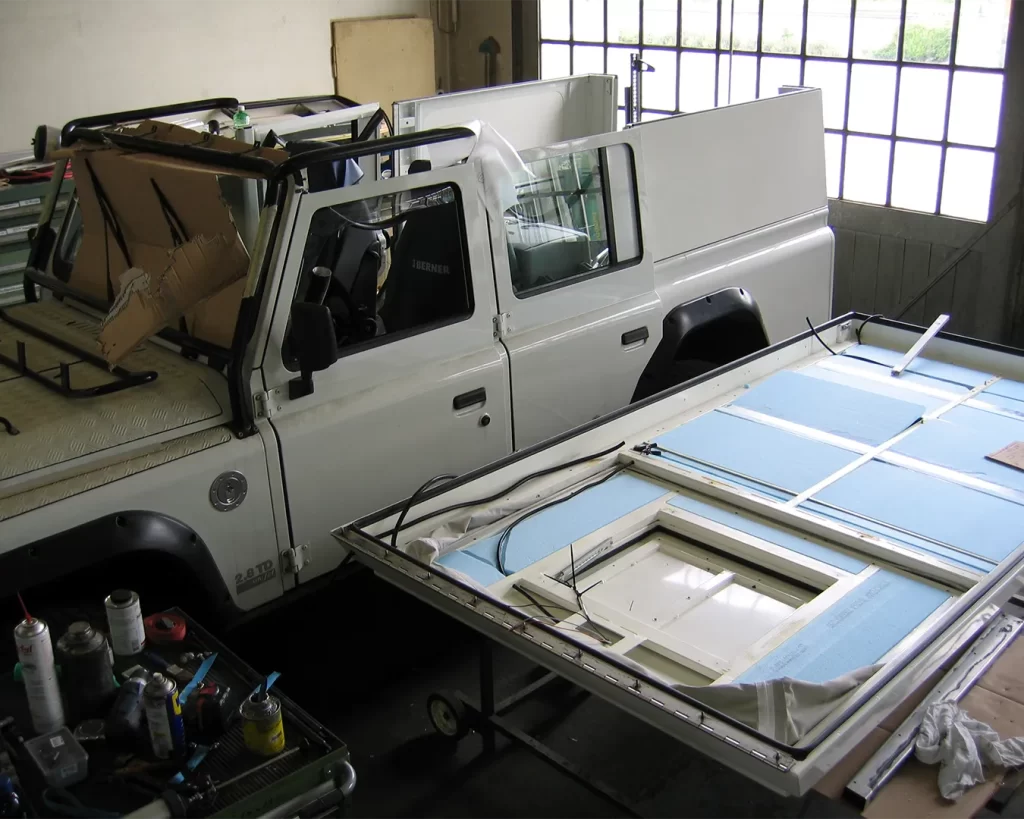
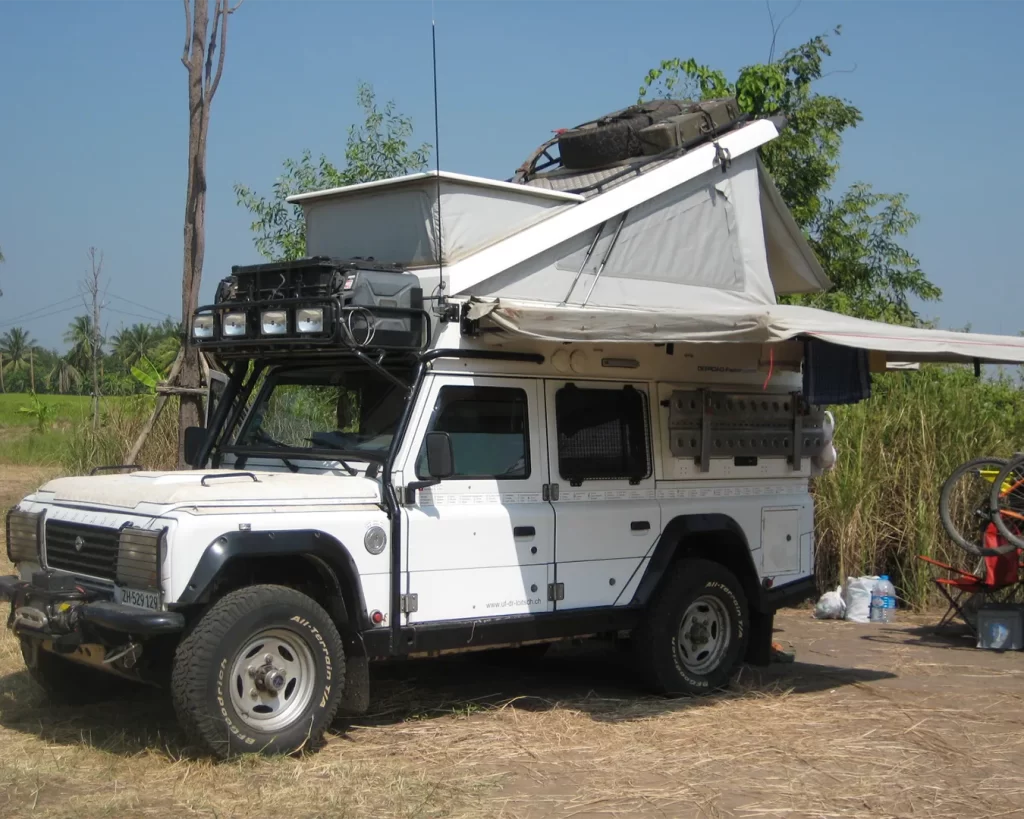
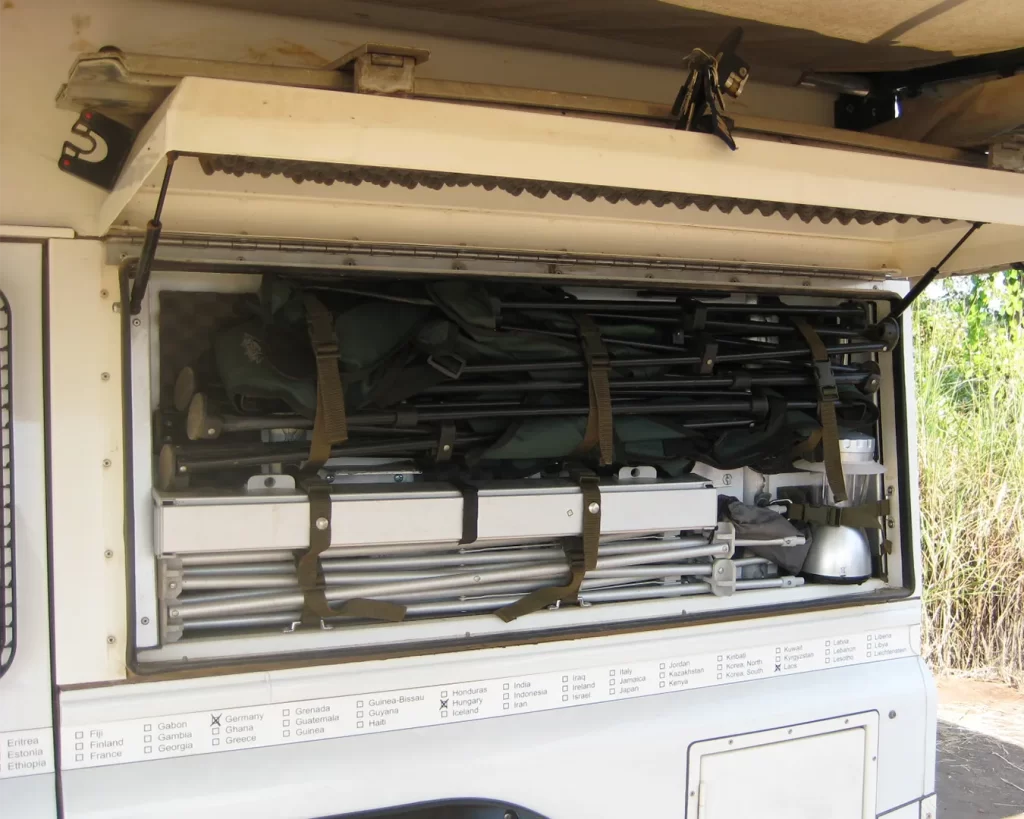
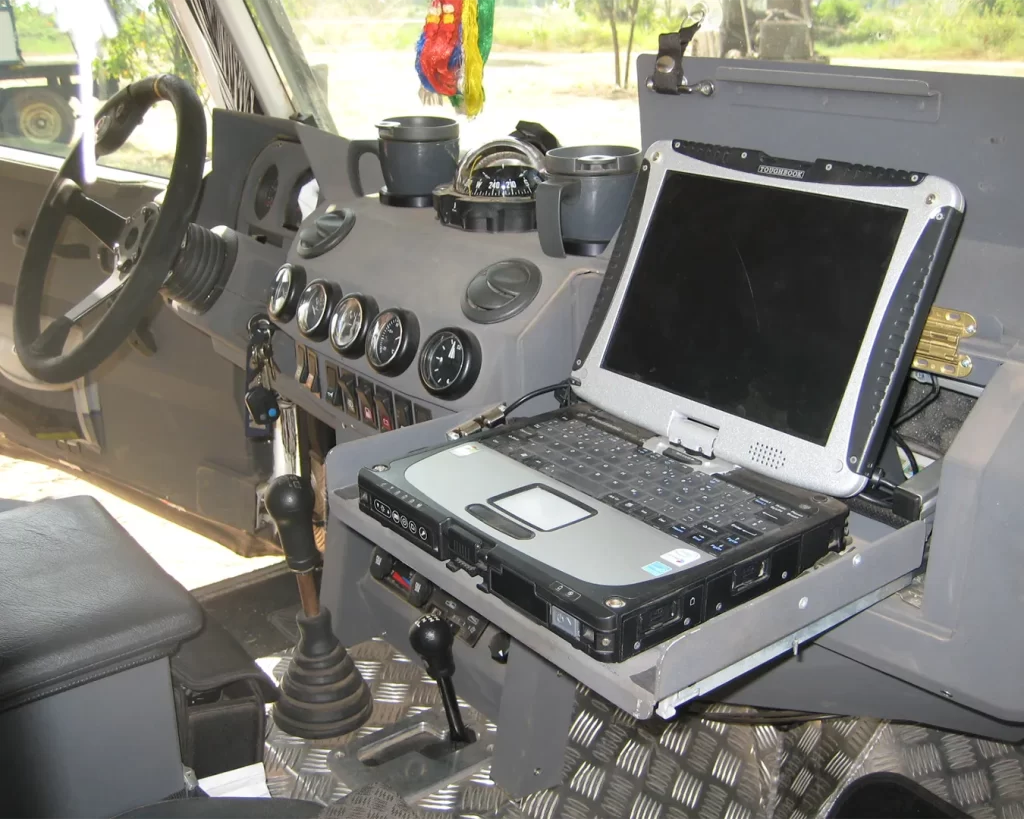
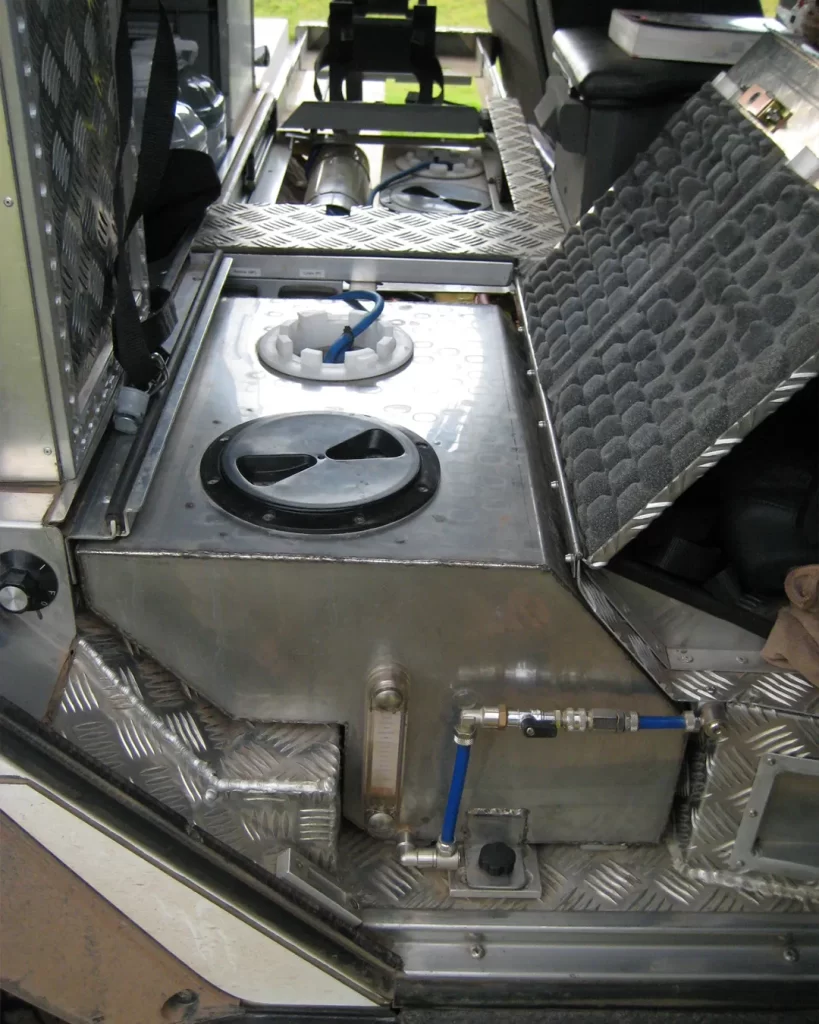
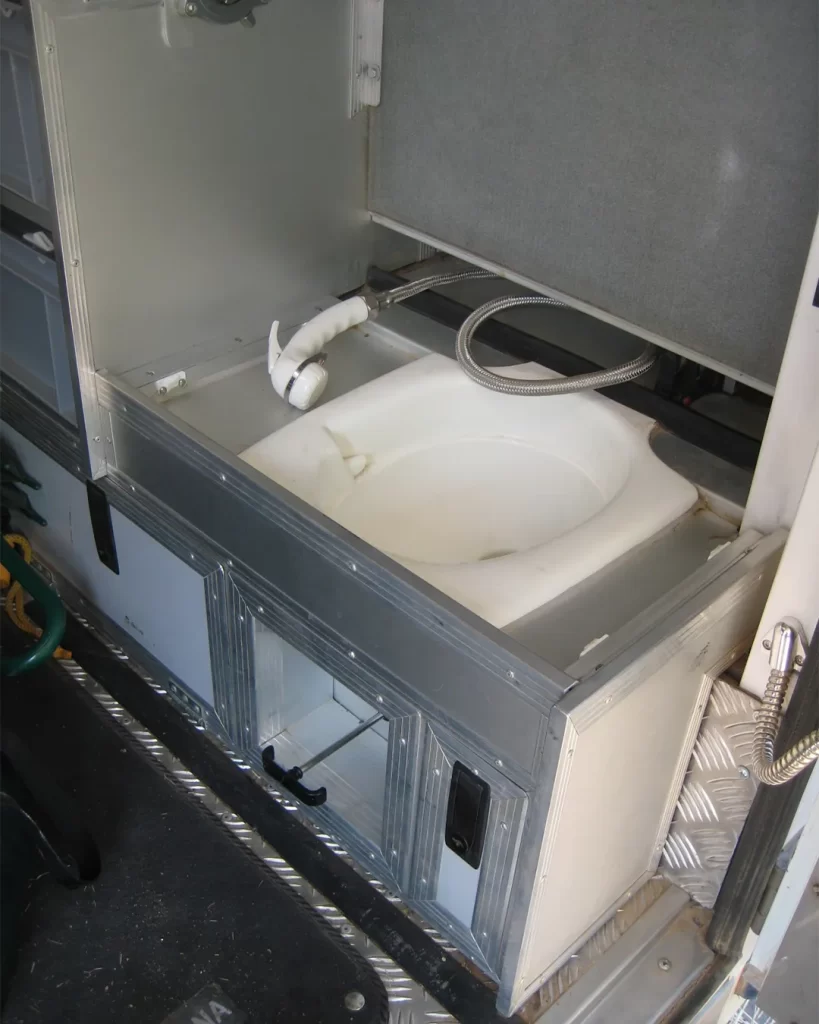
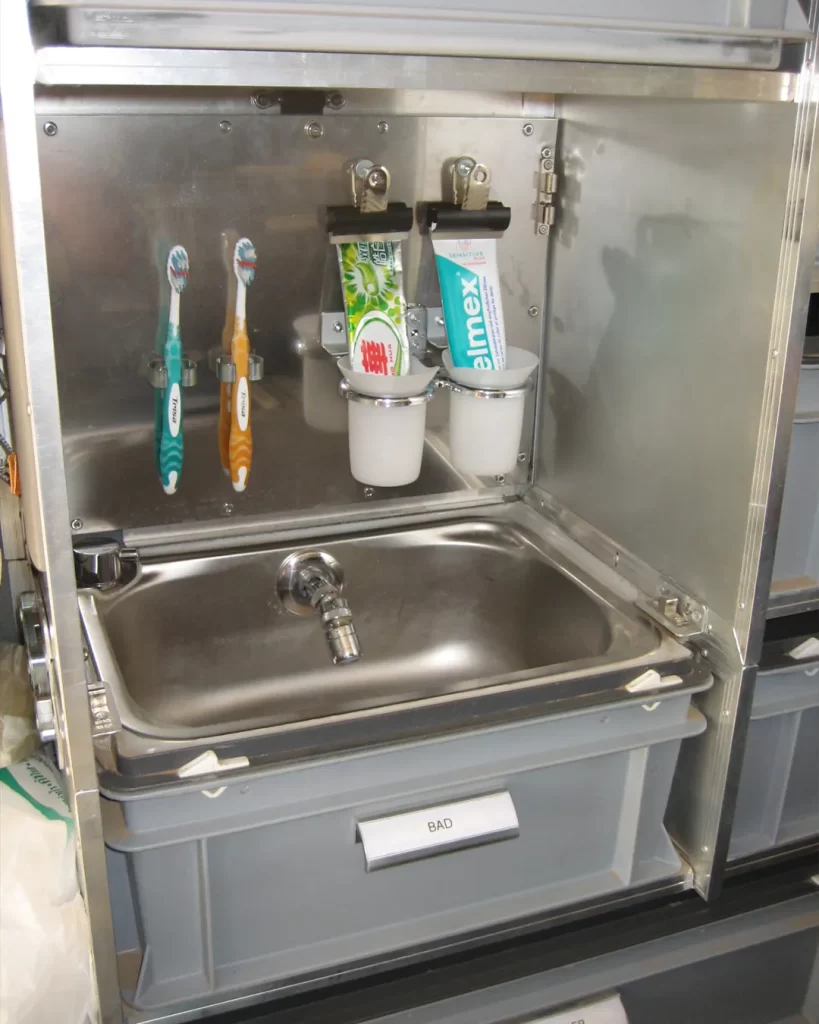
He hadn’t picked a Land Rover, the crowd favourite. Instead he went with a Santana PS-10—the Spanish cousin with more heart than glamour. Cheaper by miles, square-cut, leaf-sprung front and rear. Simple, repairable, honest. He saw the weak points and built around them: pop-top roof, full interior, everything by hand. When others sank into the sofa, Thomas stayed in the workshop.
Then he pointed the bonnet east and just kept going.
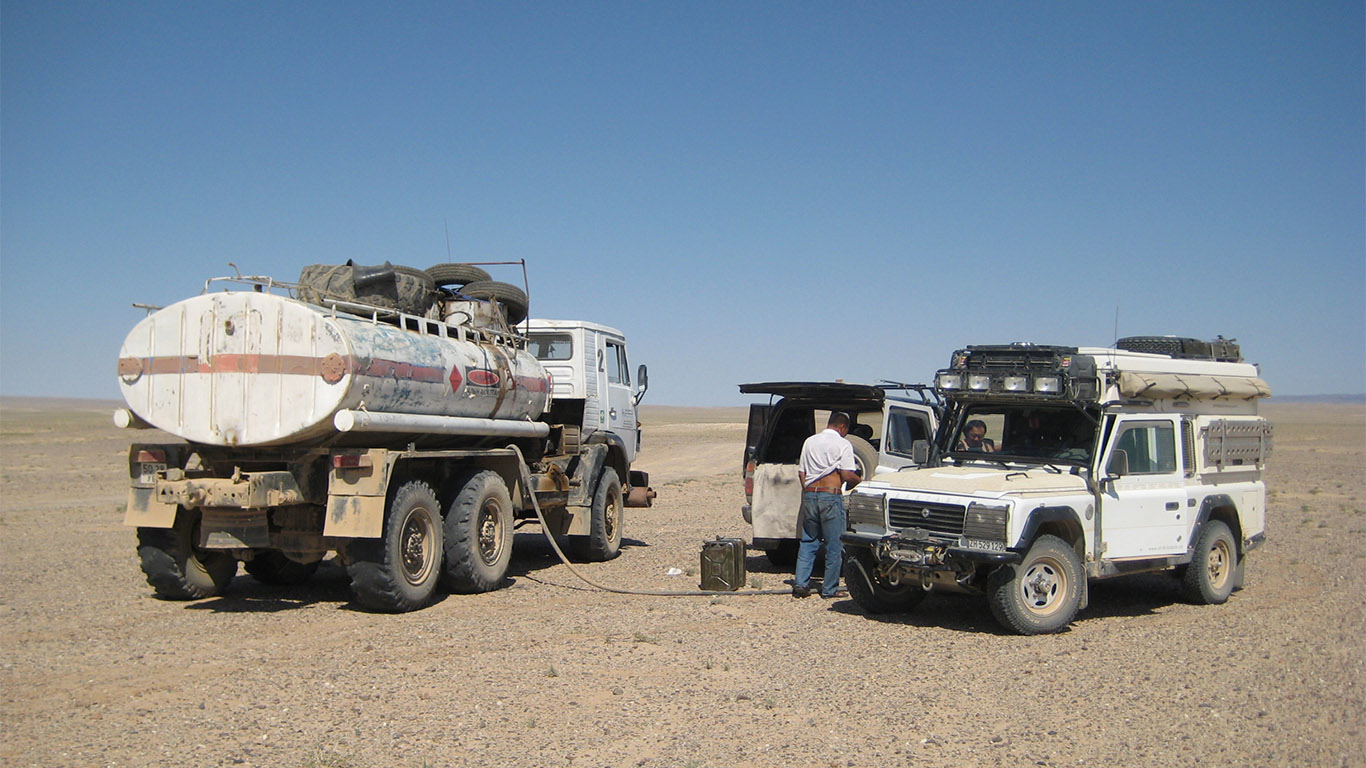
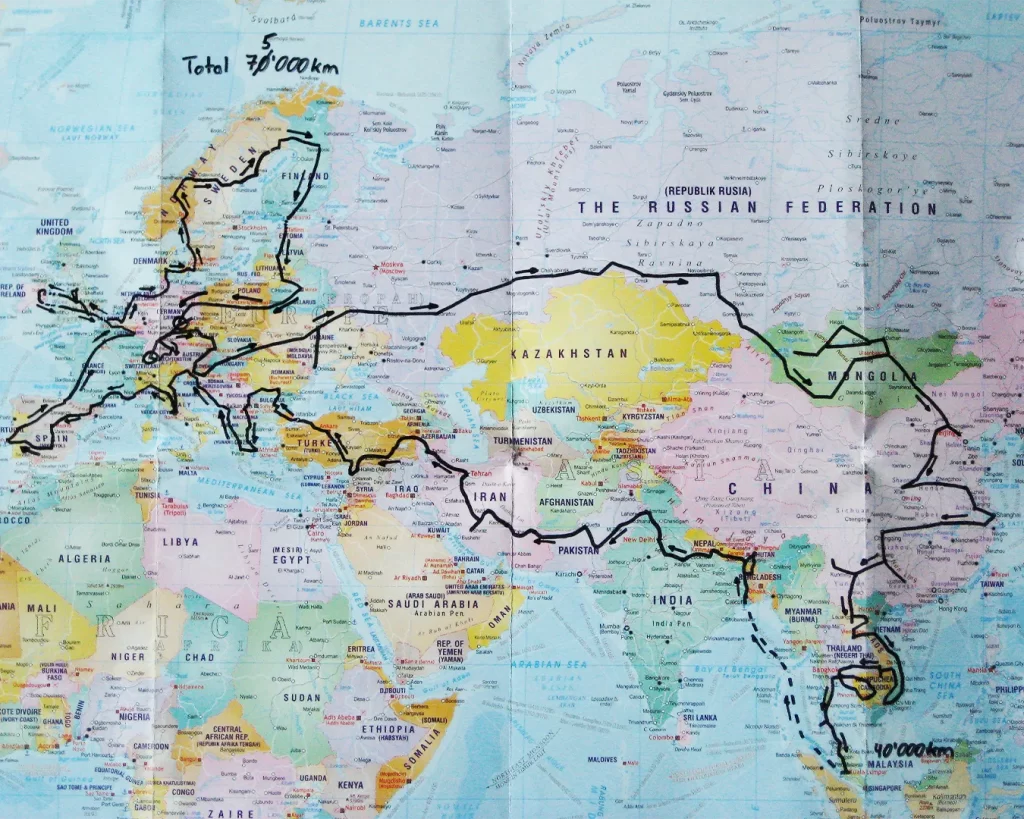
The journey that followed was pure, old-school overlanding. Improvised borders, improvised repairs, and a crash course in the physics of weight. The Santana was originally specced for just over three tonnes and ended up well past four. It coped until it didn’t. In Laos the axles lost their sense of geometry. In Mongolia the leaf springs capitulated day in, day out—as many as eleven breaks in just one day. Each time Thomas fixed them in the field and carried on.
He and his partner reached Thailand the hard way and came home the long way: through Pakistan during the war, Syria before it ignited, even an illicit dash into Vietnam. Thirteen months on the road. Seventy-five thousand kilometres. Fifty-six countries.
When they rolled into Bad Kissingen for the Abenteuer & Allrad show a year later, the truck looked every bit of it—scarred, dirty, and alive. The previous summer it had gleamed under the lights; now people came to see what had survived. The answer was clear: the parts that were light, logical, and easy to fix.
Back in Switzerland, the rhythm of construction work resumed, but only briefly. The body was wearing out—discs, back, patience. Thomas could keep earning a wage until something broke for good, or turn his obsession into a living. He chose the latter.
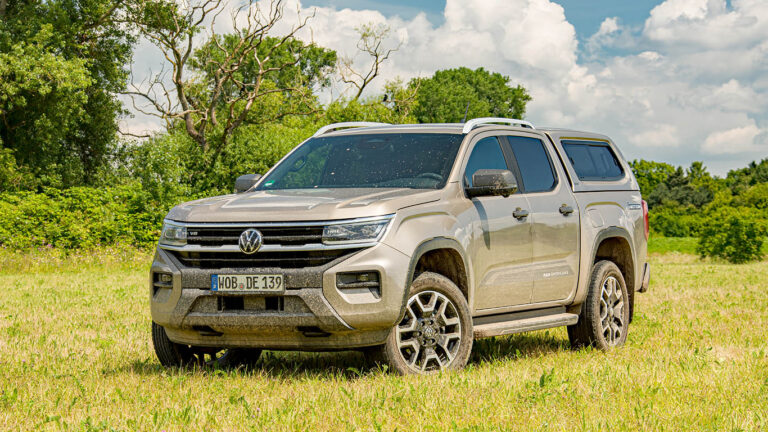
The VW Amarok became his canvas. In those early days the Amarok world was a blank sheet. Toyota’s Hilux owned the numbers, Land Rover the legend. The VW had clean lines, solid bones, and almost no aftermarket. Perfect.
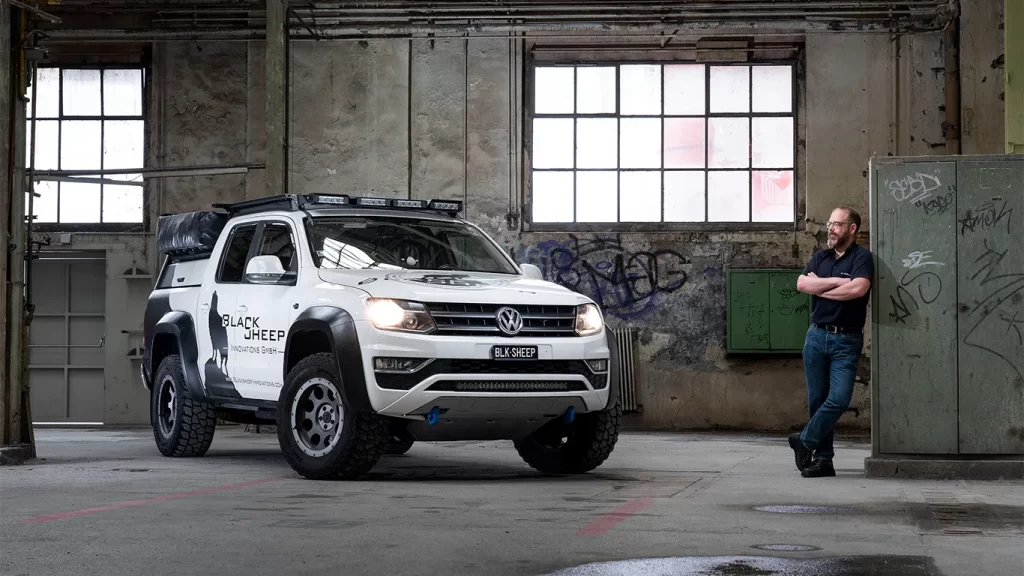
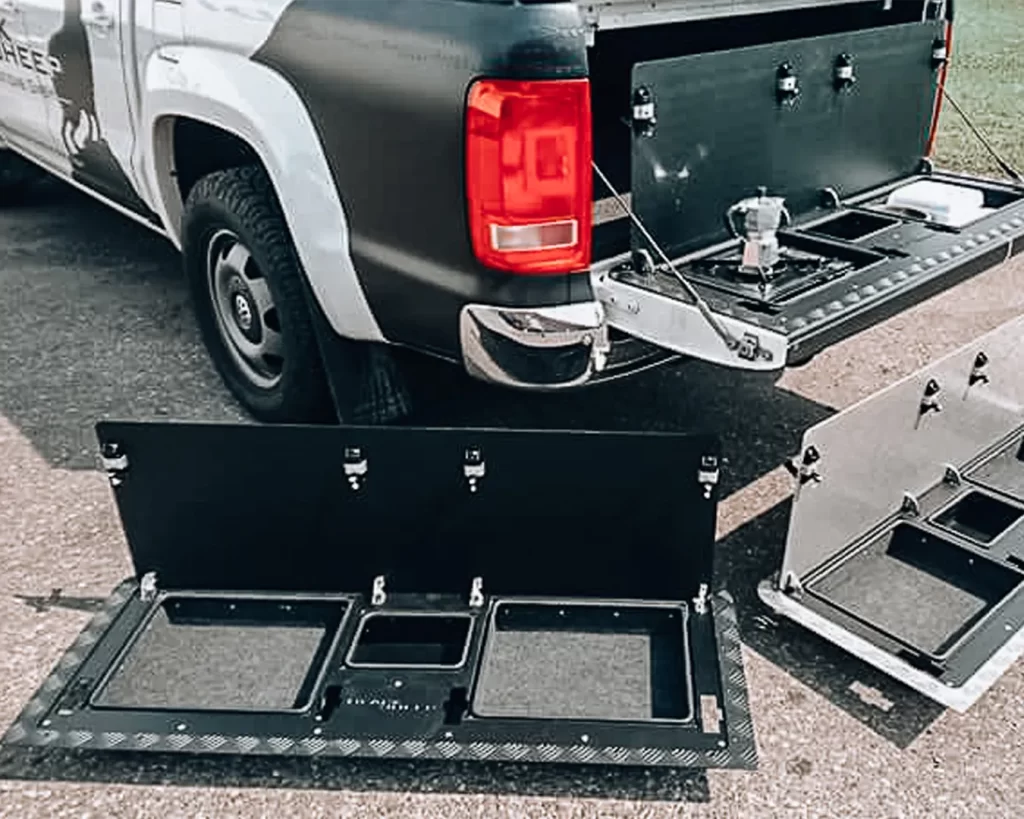
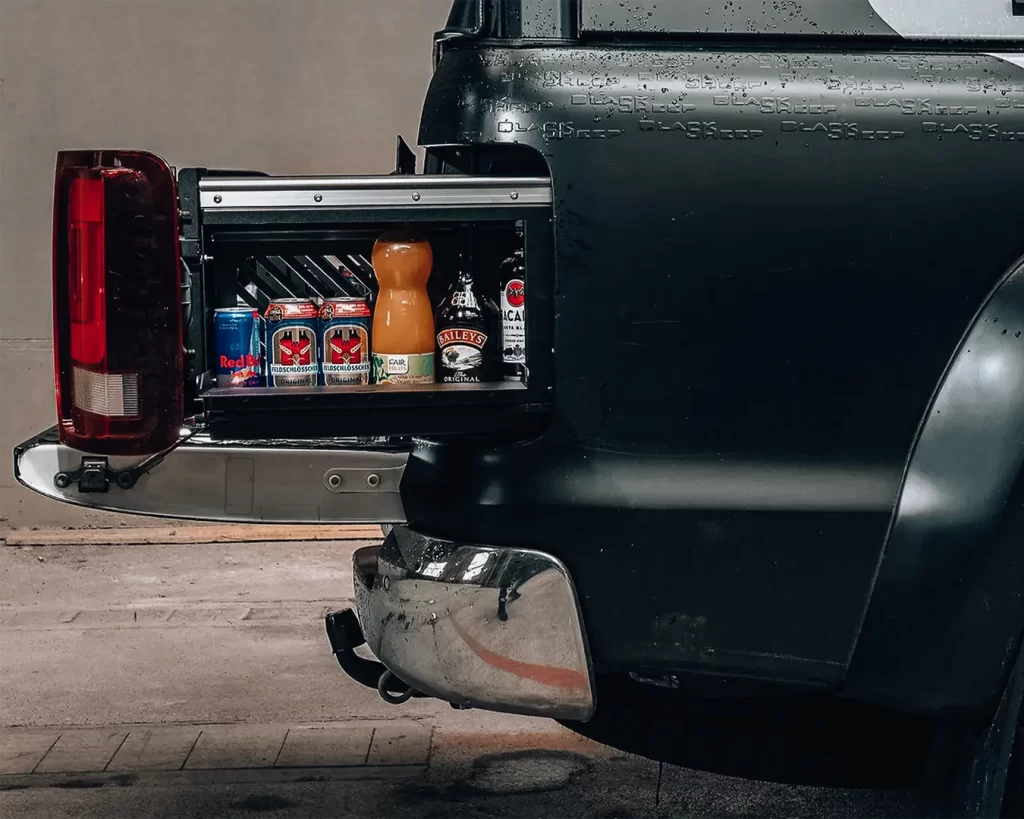
He built what the truck deserved: smart storage, accessories that looked like factory options, not bolt-ons. Everything guided by two rules—keep it functional, keep it light. Each kilo saved was one less failure waiting to happen.
The name came easily. Amarok means “wolf” in an Inuit language. In his own words, Thomas had always felt like the outsider, the black sheep. Accessories for the wolf, made by the black sheep. Black Sheep Innovations—the wolf in sheep’s clothing.
He worked mostly alone, building and testing on his own Amarok, which doubled as prototype and advert. Word spread. Hunters, municipal crews, and travellers saw the difference: practical design that felt engineered, not improvised. Orders followed, and with them a reputation for precision and restraint.
But the industry shifted. VW tied the Amarok to Ford, and the new truck didn’t feel right. The gut said no. Thomas walked away rather than compromise. A brief flirtation with the Isuzu D-Max confirmed what he already knew: he needed a platform that inspired him, not just paid the bills.
Then came the Grenadier.
The first time he saw one, it was surrounded by over-eager students at Bad Kissingen, stumbling through brochures about “heritage.” The presentation was awful, but the bones looked promising. Switzerland later received the first 136 vehicles, and Thomas had contacts in the right yard. Before the official launch he was crawling through one, removing panels, tracing welds, looking for logic.
He found it. Square steel, straightforward design, solid mounting points. Subtle roof bars and airline tracks built in—not decoration but function.
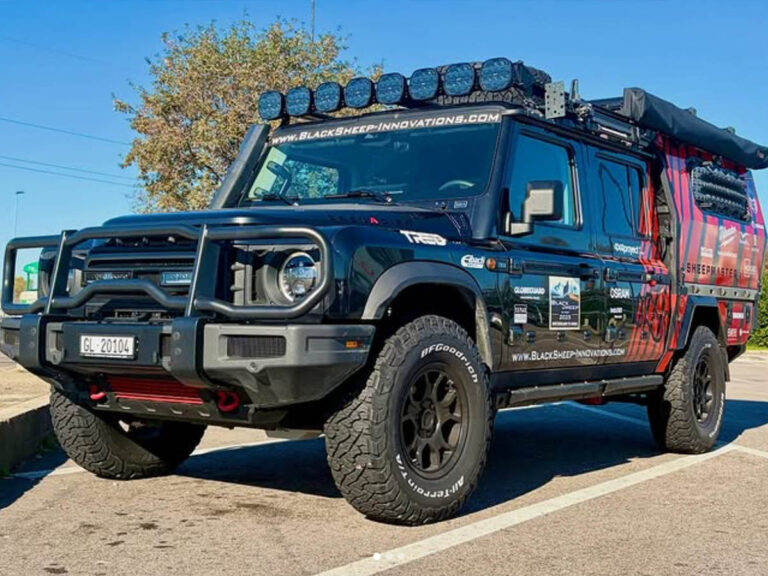
While others tried to shoehorn Land Rover habits onto a new chassis, Thomas followed the Grenadier’s own cues. A roof platform bolted to the factory bars. A fold-out table mounted to the airline track on the rear door. MOLLE carriers tied cleanly into factory fixing points. Every line looked like it belonged.
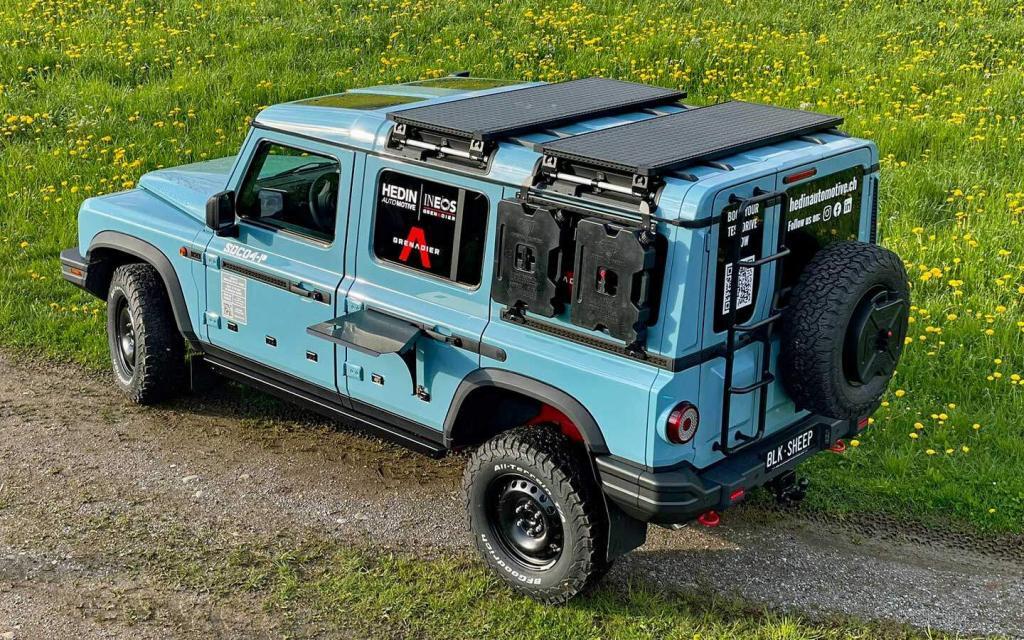
The reaction was instant. Orders from across Europe and the US flooded in. For 18 months, two men tried to meet global demand from a small Swiss workshop. They couldn’t keep up—but they kept their standards. Customers waited because they trusted the hands behind the metal.
Success brought its own problems. A distributor in the States began copying parts, tariffs rose, margins shrank. For a bigger company it might have been fatal; for Black Sheep it was just another test. They’d learned long ago how to improvise under pressure.
Then, early 2025, came the call from Dubai.
A new 4×4 Expo in the Safari Park, under the shadow of the Burj Khalifa. The easy option was to ship a demo truck and fly. Thomas chose the harder one: drive there, from Switzerland, and make the journey part of the story.
The Quartermaster sits in pieces on the shop floor. Five weeks to go. The goal: lighter, smarter, truer to the Grenadier’s bones. Instead of a heavy camper box, he designed four structural walls, with stiffness coming from the interior fit. The “roof” would be an Intrepid hard-shell tent with the floor cut out and the bed on gas struts—enter from inside, keep the weather out.
Water and air systems sit low in the chassis. Drawers claim the dead space. Nothing added that doesn’t earn its keep.
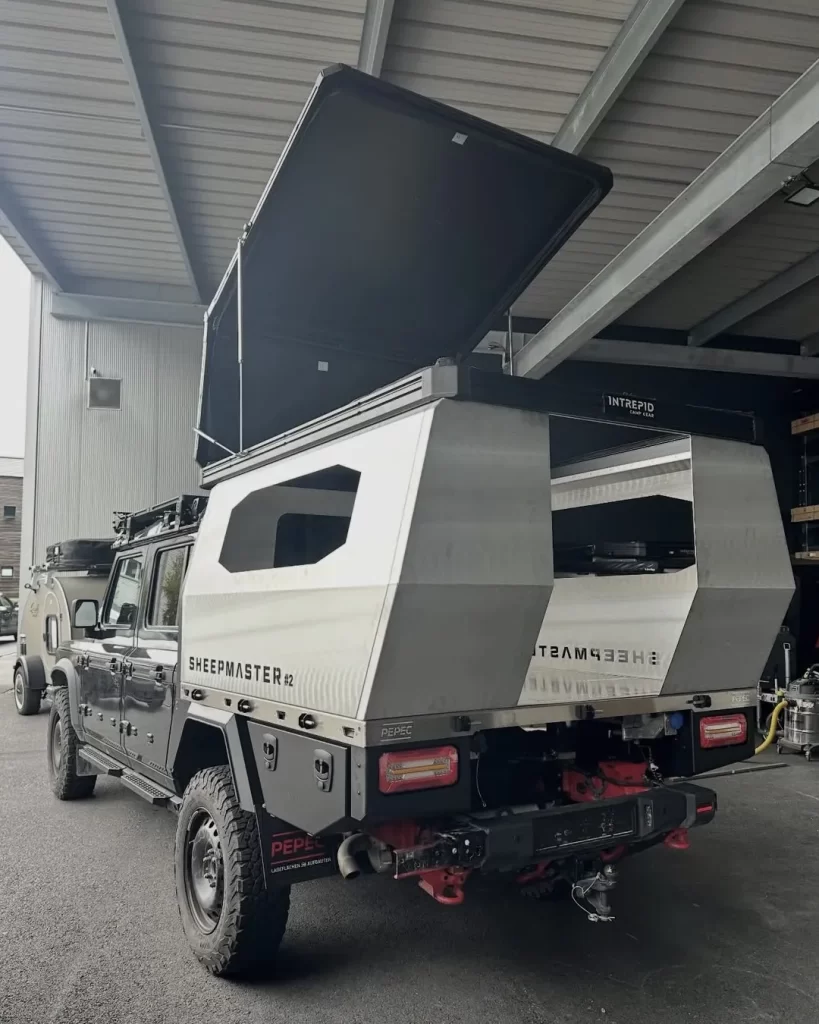
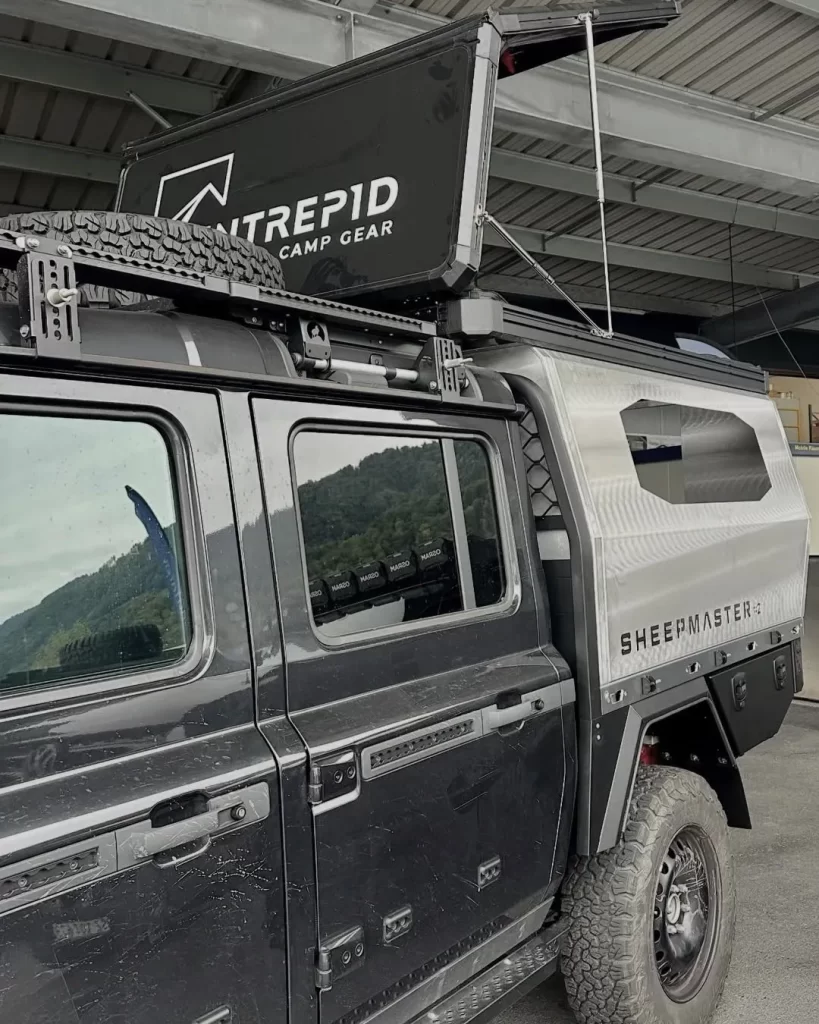
Partners stepped up with top-tier kit: 4×4 Proyect from Spain supplying Bilstein-based rally suspension, the first set in Europe; wheels from the US with integrated deflators; Osram lamps so new they won’t hit the market until November. For Thomas it felt like Christmas, only louder and greasier.
But the parts list is secondary. The philosophy drives everything: weight is the enemy, clean design wins, and authenticity beats marketing every time. In Dubai, with the desert sun on the paint and the city skyline beyond, the Quartermaster will either look right—or it won’t.
On the map the route seems simple: Switzerland, Romania, Bulgaria, Turkey, then the dream line through Iran, Kuwait, Saudi Arabia, and into the Emirates. If politics shift, there are alternates. Worst case, a ferry from Greece. The plan is flexible because it has to be.
Safety isn’t theatre. Updates will post 48 hours late, never live. Camps are chosen by instinct—if one of the crew feels uneasy, they move on. Nights are spent in the truck; hotels exist for showers and laundry, not stories.
The further east they plan, the more invitations arrive. Off-road clubs in Kuwait, friends in Saudi, all eager to host. Hospitality is genuine but eats time. The key is to reach Turkey fast, then let the Middle East set the pace.
The Quartermaster will be heavy enough to matter but light enough to live. Tools, fluids, and critical spares only. Thomas trusts the vehicle; he knows its quirks. A warning light means conversation, not catastrophe. Cover the dash if you must—but keep moving.
Time constraints mean they will only be driving one way. Black Sheep can only close the workshop for three and a half weeks. Once the show ends, the team will fly home and the Quartermaster will follow in a container, probably to Bremerhaven.
The challenge isn’t the kilometres—it’s the rhythm. Seven thousand of them can be done; the art lies in covering ground without burning out, saying yes to people without losing days, staying loose while the clock keeps ticking. It’s not off-road bravado. It’s logistics, discipline, and a taste for uncertainty.
And when the truck finally rolls into Dubai, dusted but intact, it won’t just be another display piece. It’ll stand as proof that good design and real-world thinking survive the miles.
Thomas calls the trip an Egotrip, but there’s no arrogance in it. It’s about feeding the restlessness that built the company in the first place. Running a small workshop ties you to the phone, the orders, the routine. A long road trip blows the walls out again. New countries, new faces, new sparks of ideas—that’s what keeps him moving.
He’s clear about the philosophy: this is overlanding, not off-roading. The goal is to arrive with the truck intact and your head full of stories. Breaking things for applause never made sense to him. A machine that survives speaks louder than one that dies dramatically.
The Santana taught that lesson. Every failure came from excess weight. Ever since, he’s treated simplicity as survival.
He also trusts the Grenadier. The so-called sensor circus doesn’t scare him. Older trucks overheated and nobody noticed; now the dashboard just tells you. Experience filters the noise.
Risk, he says, is mostly about how you behave. During that first long journey, the most dangerous country wasn’t war-torn Pakistan but peaceful-looking Nepal. Stay small, stay respectful, talk to people, and the road will look after you.
That outlook threads through every weld and line of the Quartermaster. It’s built to go the distance and come home stronger. The Dubai show might be the official destination, but the real story will be written between the borders—one kilometre, one conversation, one idea at a time.
Black Sheep Innovations began because one man couldn’t leave an idea alone. It grew because those ideas worked: light, functional, honest.
Now that same thinking heads east in a Grenadier Quartermaster, chasing the horizon once more.
By the time it sits under the Burj Khalifa, gleaming in the desert light, the journey that made it will already be behind it—written not in press releases, but in dust and distance.
Watch this space for more details on the Quartermaster to Sheepmaster conversion.