Newsletter Subscribe
Enter your email address below and subscribe to our newsletter
Sprache wechseln:

Does the mythical creature of the ideal overlander/daily driver really exist? It’s a heavy question, a philosophical quagmire if ever there was one. The variables are as unruly as a pack of wild dogs—endless considerations swirling around like smoke in a dimly lit bar. Personal taste shifts like the wind. Budgets tighten the noose. Dreams and schemes pile up, all pinned to this steed of metal and rubber. It’s enough to make you want to toss in the towel and shout a resounding no! So maybe I shouldn’t overthink it. Better to embrace the chaos and accept that perfection is a cruel mistress bent on psychological torment.
Looking at friends and colleagues who climb down from their rooftop tents in the morning, drop the tailgate and brew coffee strong enough to wake the dead and evict the devils left behind from last night’s fire-side storytelling, I join a community of travellers who see a pickup as both overlander and daily driver. School runs and office commutes aren’t on my to-do list. More a case of squeezing through alleys in ancient towns on the brink of extinction, or following a faint trail through remote terrain to help a conservation project or trace trade routes so pale they no longer show on maps.
So why has Larry, my faithful 1963 Land Rover, fallen into disrepute? He hasn’t. But driving a vintage truck with no creature comforts isn’t everyone’s cup of tea. I love the bare-bones simplicity and the fact that maintenance can be carried out anywhere with cheap, readily available parts.
But a modern pickup with comfortable seats, air conditioning, power steering, suspension that forgives oversight, the ability to melt into modern traffic, and the capacity to satisfy weekend warriors and long-haul overlanders alike…that’s a different challenge. One for the modern family man—and his wife who also needs space for kids, luggage and sports kit.
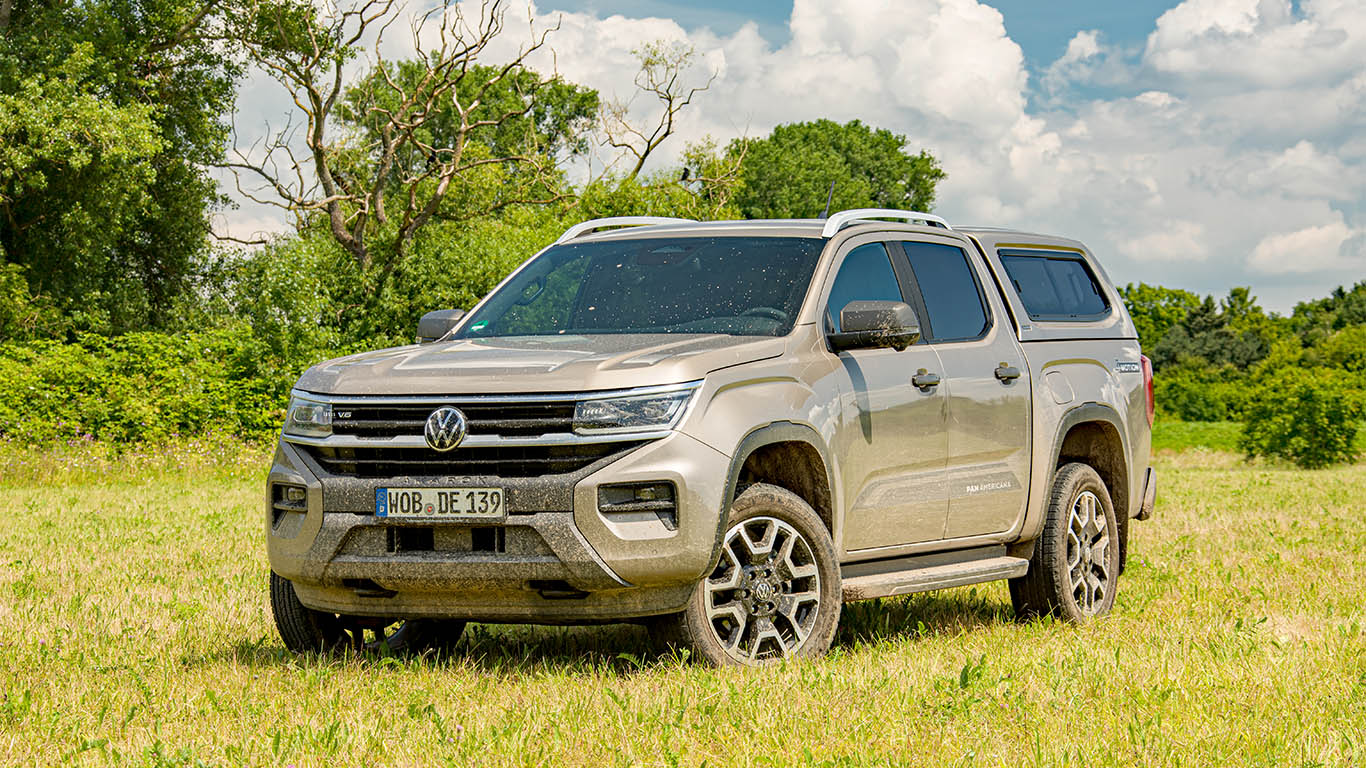
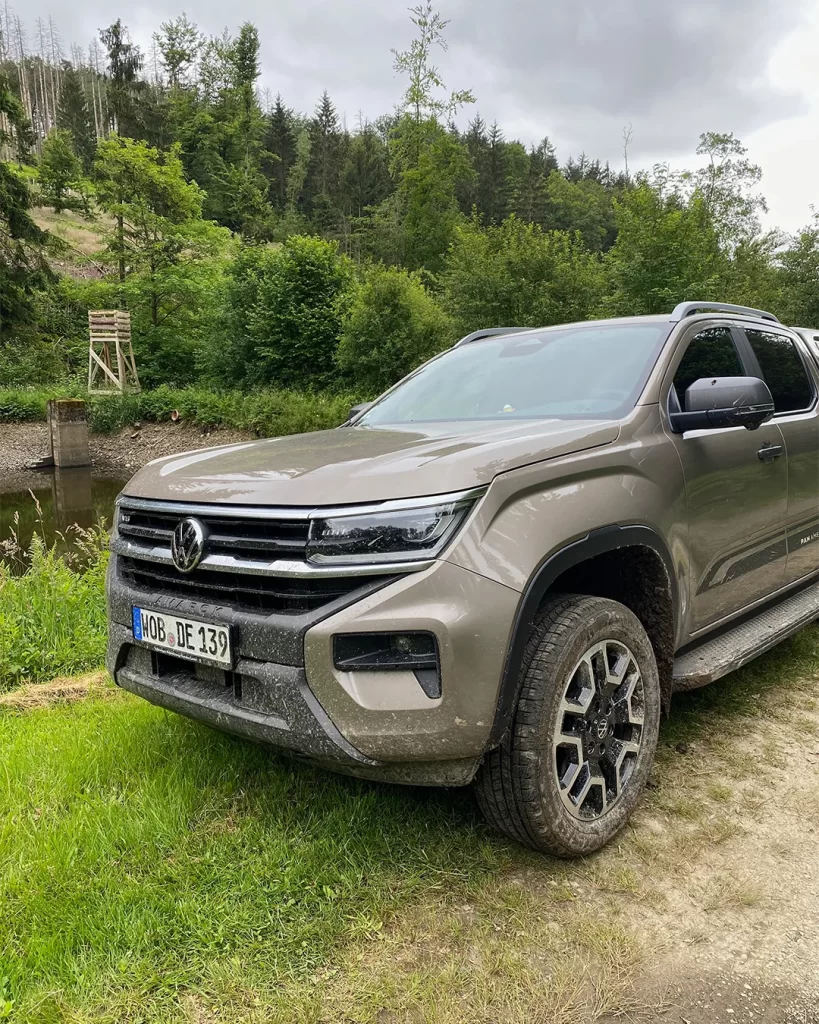
The VW Amarok PanAmericana with its factory-fitted hardtop has an air about it, hinting it’ll fare better than its SUV siblings once the asphalt runs out. Probably? Well, that’s what I wanted to find out. And what better way than to live with one for a couple of weeks.
Walk around from near or far and the sculpted form comes across as rugged, purposeful…and enormous. A long beast, which should mean a roomy cabin and plenty of bed space. Good for travel. Urban parking? We’ll see.
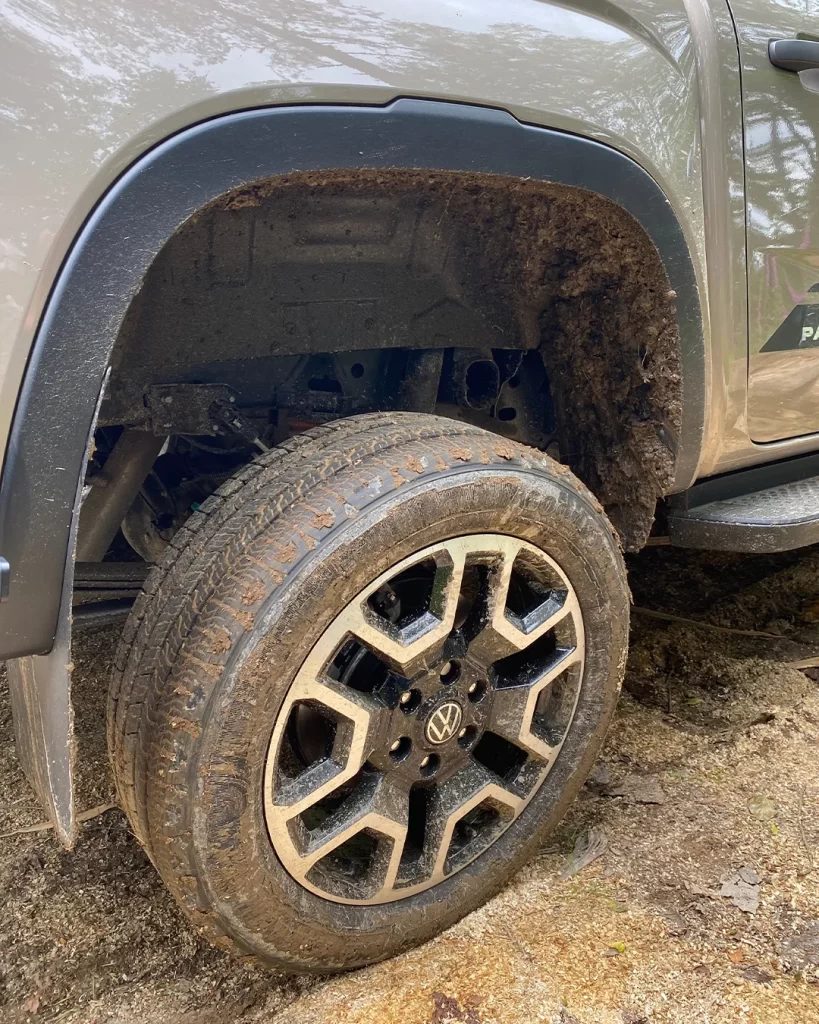
It sits on 20” alloys shod with road tyres—not ideal for off-pavement work, but that’s an easy fix. Steel rims and A/T, M/T or R/T tyres will slot easily under the squared arches.
The hardtop is a win: security, weather protection, and a look that’s less workhorse, more refined traveller. Locks tie into the central locking, so no fumbling with keys on a dark night and less chance of leaving the tailgate open.
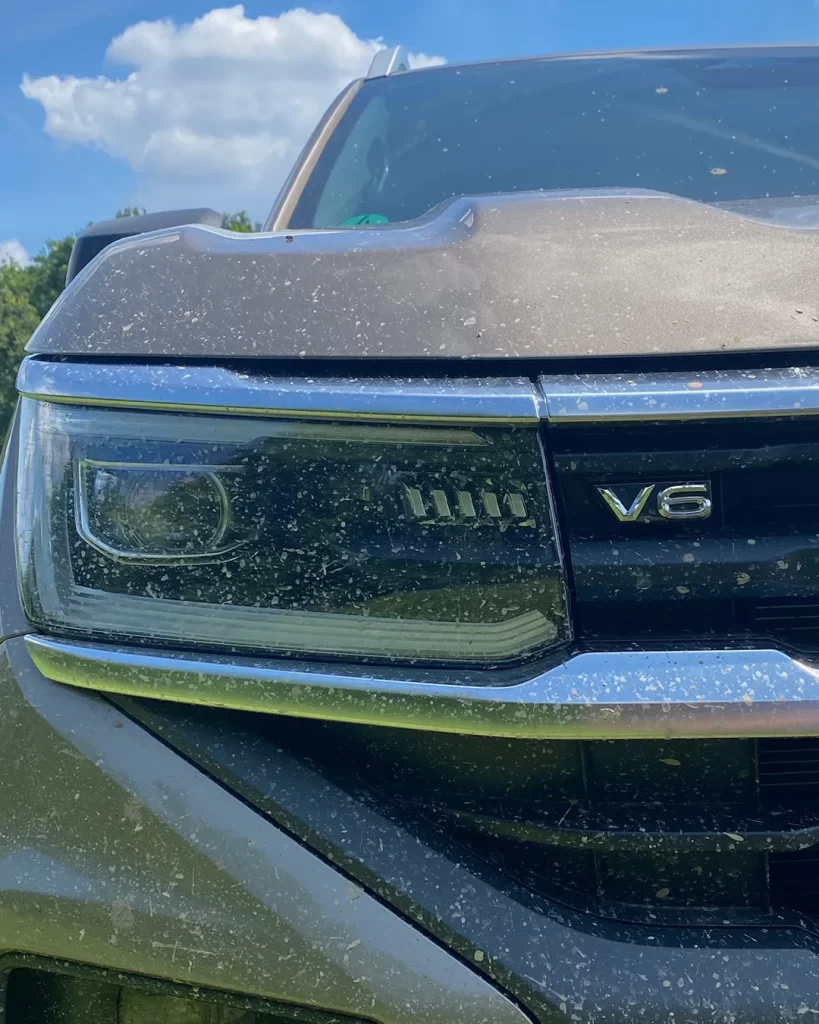
On the road, the PanAmericana is planted and predictable. Steering has feel. The Ford-sourced 3.0-litre V6 TDI flows with traffic in comfort. Even the neighbours were impressed. These are people used to seeing 4x4s and expedition trucks in front of my house, yet the Amarok drew praise. “So you’ve finally got a normal car then!”
Driving back from the Eifel, an oncoming Amarok flashed its headlamps and the driver raised a hand in salute. I thought that was a Land Rover habit. Turns out Amarok drivers are an enthusiastic bunch, too. Love that.
VW’s team has done a fine job. Sliding behind the wheel, the driver’s seat adjusts to fit all physiques. Plenty of shoulder and leg room. At first the smart dash layout and big centre screen felt out of place, but the leather upholstery, Harman Kardon sound system and general ambience soon proved otherwise. This is not just a polished load-lugger in disguise.
Appearance and comfort rival some premium SUVs. Controls are well placed. Visibility from the driver’s seat is excellent. You know you’re in a “proper” truck when you look out over the magnificent bonnet and see exactly where the corners and arches sit. Other drivers think twice before cutting you up.
Even on the hottest days, the air-conditioning kept the cabin cool without the fans drowning out a podcast.
Rear seats? Great for kids. Taller adults may find it tight behind my driving position, but quality is consistent throughout.
And then the litmus test: door shut. Hollow bang or solid thud? The Amarok passes with a reassuring thump. On the highway, you can hold a conversation without shouting. Solid. Soundproofed.
The recipe: V6 TDI, 240 bhp, 600 Nm, 10-speed auto, 2H/4H/4L transfer box, rear diff lock. Enough to get you anywhere across storm, rock, sand or snow.
But this isn’t just about spec sheets. Empty or loaded, the suspension won’t rattle your fillings, and body roll isn’t excessive. Firm and comfortable is the verdict.
Big number: 2,399 kg unladen. Don’t expect to win drag races. Country lanes and twisty climbs are simply dispatched: point, press, go. On the motorway, the long wheelbase irons out imperfections. Long hauls are easy miles. Top speed? 180 km/h, but who cares. Loaded with kit and maybe a rooftop tent, you’ll cruise at 120.
Off-road, torque through the 10-speed box makes for predictable progress. And when it gets sticky, flick the diff lock.
Rooftop tents? No problem. Dynamic and static load ratings of 85 kg and 350 kg respectively make the Amarok an ideal overlanding platform.
On road: 5.35 m long, 1.9 m wide (without mirrors), just under 1.9 m tall. Not as long as the Grenadier Quartermaster, but longer than any SUV you can name. Urban parking bays can be a squeeze. Turning circle is 12.9 m—less than the Quartermaster’s 14.5, more than a HiLux.
Load space: two Euro pallets fit easily. With the hardtop, gear stays safe and dry. Just remember, unsecured loads will slide. Tie it down, or risk climbing in after your groceries.
As a daily driver, patience may be needed for parking.
As an overlander: this is your basecamp. Bedroom high above the critters. Kitchen on the tailgate. Space for everything. Four seats—unless, like me, you use one for the fridge.
If you take your overlanding seriously, off-the-shelf stats are solid: 800 mm wading, 30°/23°/21° approach, departure and ramp. After-market accessories can boost them further.
Every owner has different priorities, but as an expedition contender or weekend escape rig, here’s my take.
Likes: payload capacity; accurate steering; excellent visibility; comfort that sets the benchmark.
Dislikes: exterior panels feel thin—dings will show; modern electronics mean field repairs aren’t always straightforward.
So, does the mythical creature of the overlander/daily driver exist? Not everyone can afford two vehicles. If you’re serious about vehicle supported remote travel and need one car to do it all, the Amarok PanAmericana (or a simpler trim) deserves a place on your shortlist.
Off-road it’s capable. On-road it’s comfortable. Payload is generous. VW has a global footprint, so spares shouldn’t be a problem when you’re far from home.
The PanAmericana spec is good value: capable, comfortable, and (almost) showroom-ready for travel. Add your own kit and personal touches—the accessory market is ready to help.
The Amarok PanAmericana isn’t your average building-site hack, so keep an eye on the used market as leasing contracts end. Well-specced, well-serviced examples—likely with few off-road miles—will appear. If you’re looking for a solid pickup foundation for travel, why not a pre-owned Amarok? The first owner swallows the depreciation. You swallow the miles.