Newsletter Subscribe
Enter your email address below and subscribe to our newsletter
Sprache wechseln: 
15th – 20th of April
Distance cycled: 121km | Total Distance: 1840km
From the former fishing village of Karateren I had planned a two day 4WD excursion to Barsakelmes Island and Kaskakulan. The Aral Sea was often referred to as the “Sea of Islands,” virtually all of which are have become barren mesas rising above the former sea bed, now the world’s newest desert, the Aralkum Desert. The name “Barsakelmes” literally translates to “you go and don’t return” and of course we were hoping this not to be the case.
Getting to Barsakelmes Island, now a nature reserve, involved a very rugged drive over the flat sea bed. We were escorted to Barsakelmes by by two local security guards as it is required for safety that we didn’t drive there alone.
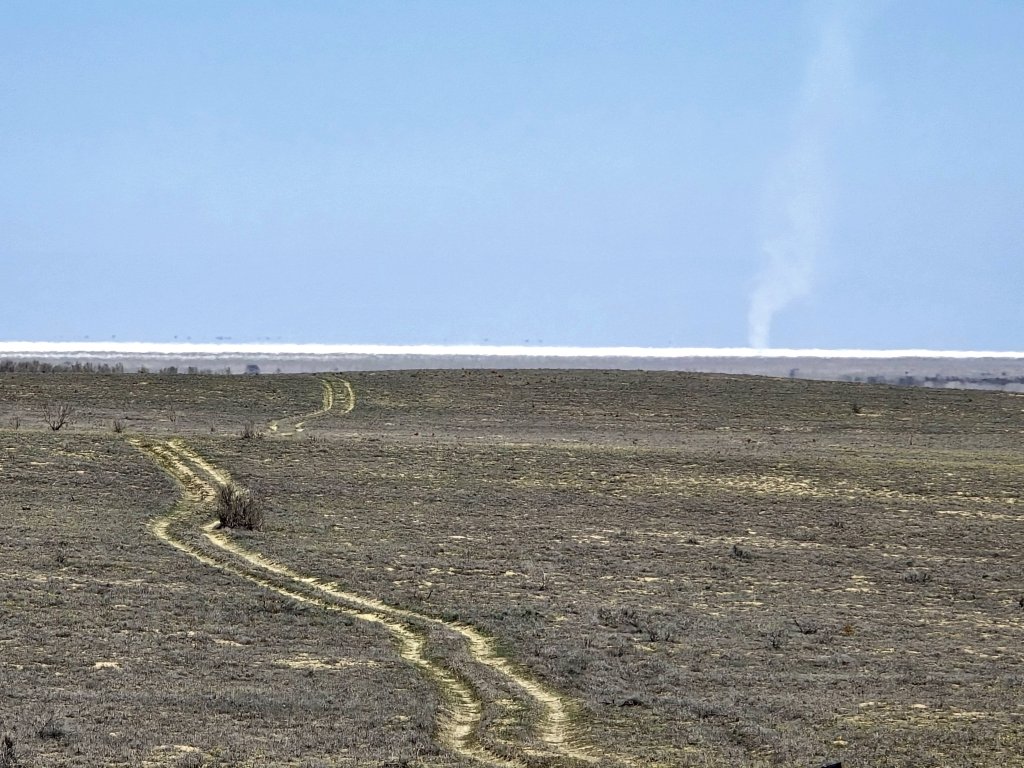
The surface was spongey and powdery underfoot, and sprinkled with countless seashells. In some places there were small tussocks of vegetation while other parts were extremely bare or rippled with small white sand dunes. Toxic saline sand and dust from the seabed was being funnelled into the atmosphere by small tornadoes. It was windy during both of the days we were there. Where once the air would have been clouded with fog from the sea, now it was murky with airborne dust particles.
First stop, roughly 50km from Karateren, was a saxaul plantation. It was gifted by USAID to support the Kazakhstan Government in its efforts of afforestation of the dry bottom of the Aral Sea.
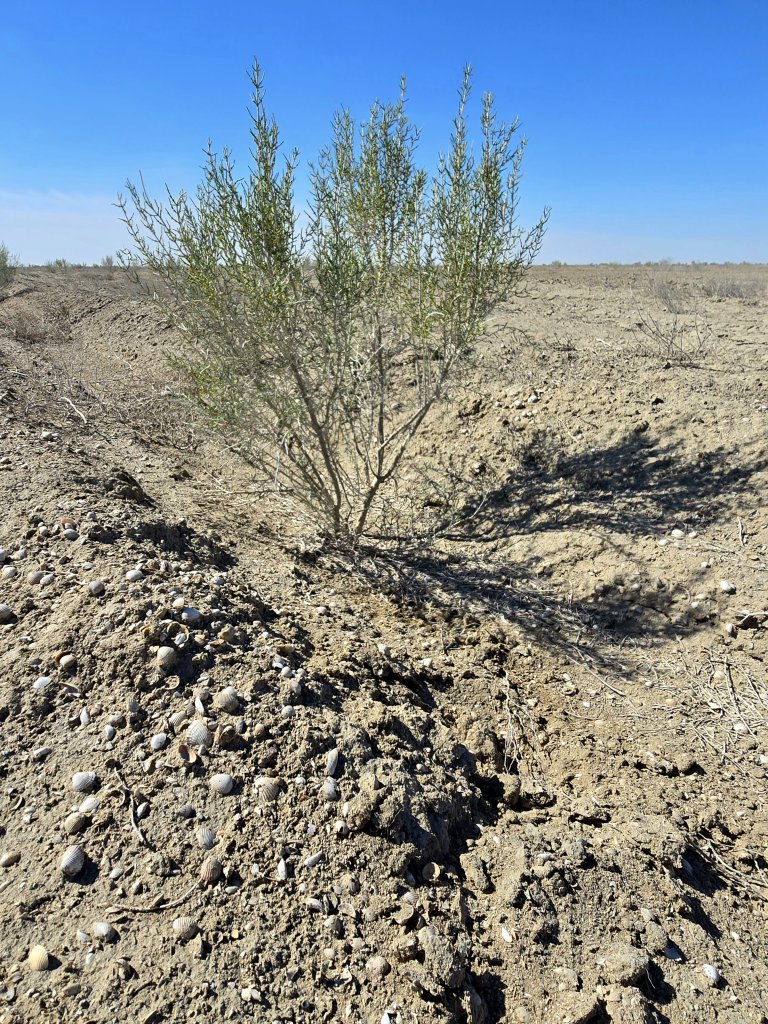
Saxaul trees are resilient shrubs that can thrive in barren, saline conditions. I find the growing of millions of these hardy plants to combat desertification and stabilise the shifting sands particularly interesting because, growing up on my family’s farm, we planted tamarisk trees in a part of the farm that was tending to be saline and waterlogged. Saxaul and tamarisks are of the same family. Saxaul are native of Central Asia and the Middle East.
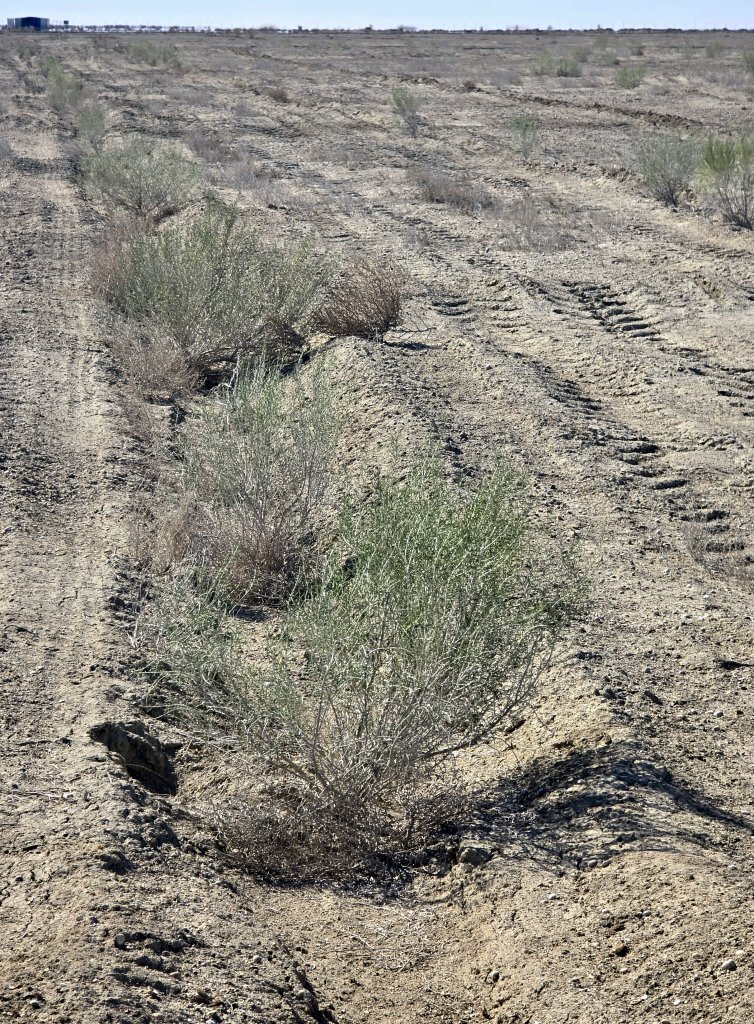
The saxaul tree has become essential to help curb the effects of toxic dust and sand while also stabilising the rapidly warming climate and acting as carbon sinks. One hectare of 13-year-old forest absorbs nearly five tons of carbon dioxide and produces about four tons of oxygen annually. Its deep roots anchor the sandy soil and protect it from erosion.
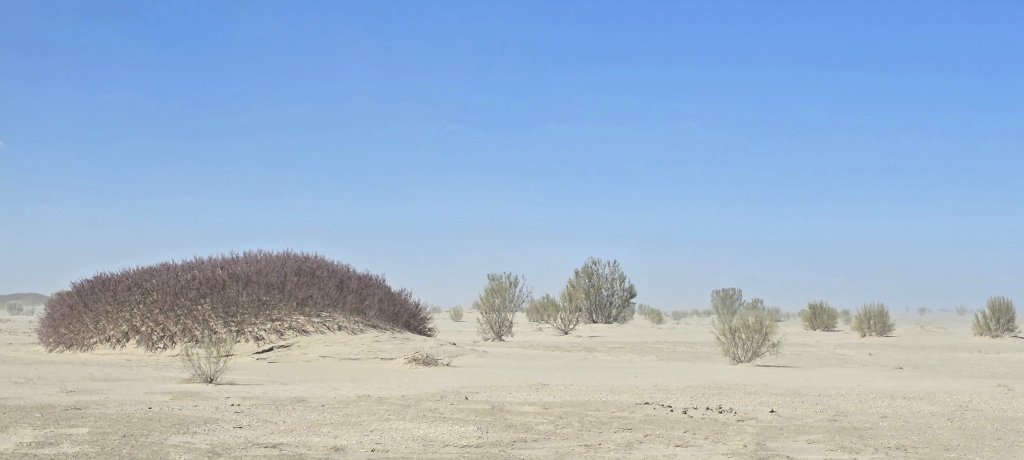
One-year-old saxaul plantations can reduce wind speed by 20.5 percent. Wind can drop to nearly zero when the trees reach seven years of age. This slows the spread of salt and chemical residues from the exposed seabed.
The new plantation of saxaul seedlings was only a tiny green-tinged island of hope amongst the vast wasteland and as we drove across the seabed, the scale of the challenge of mitigating this manmade catastrophe hit home.
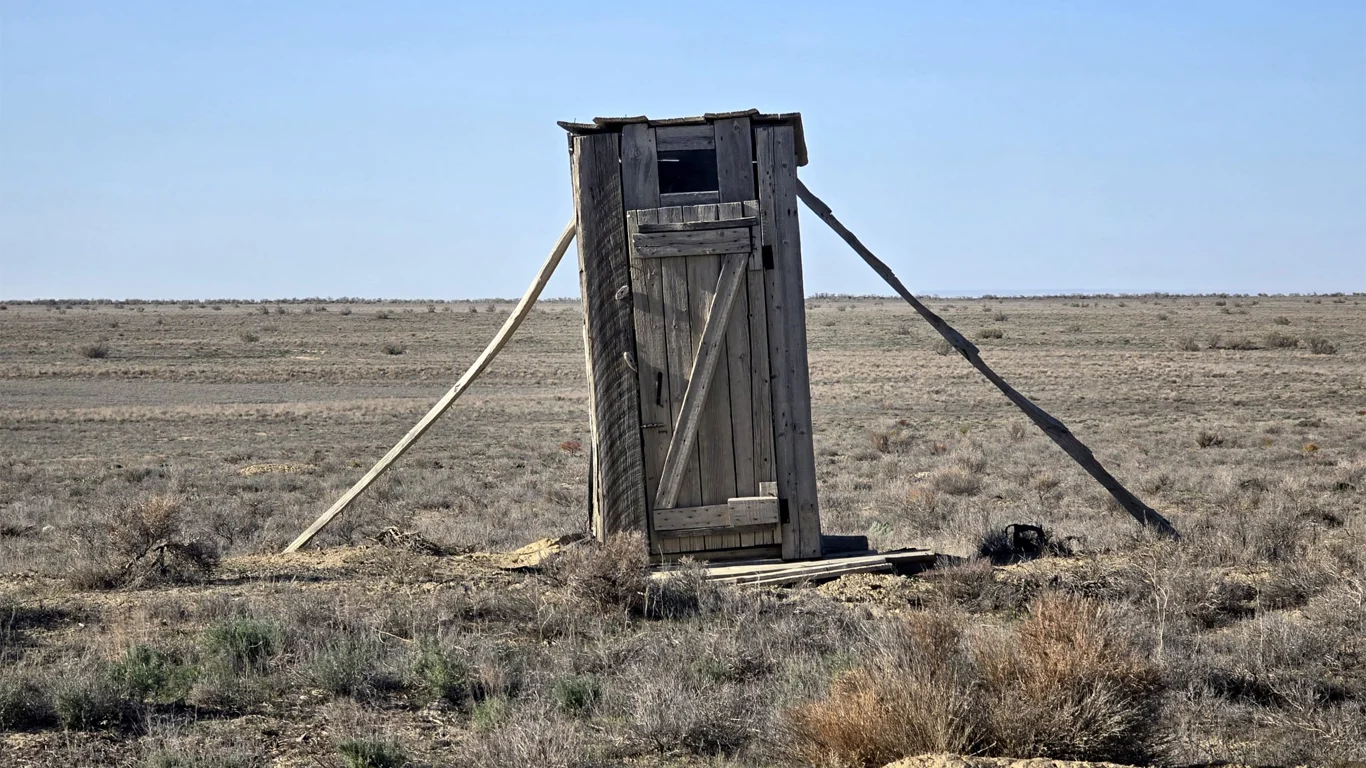
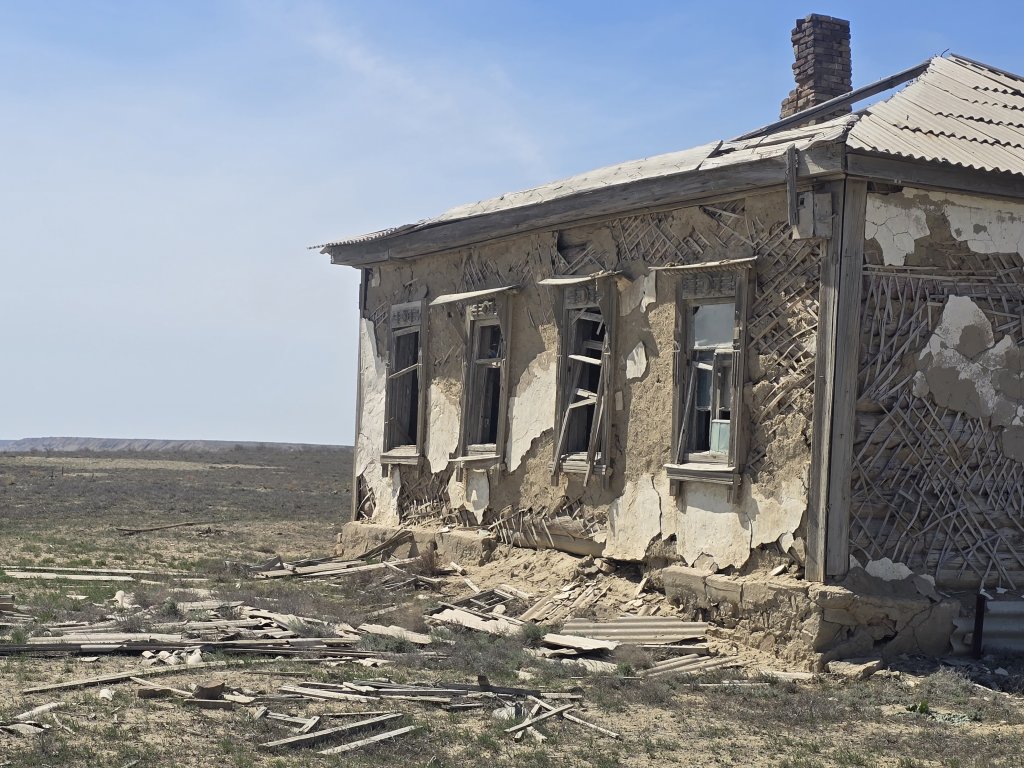
First stop on the island was the old weather station, which is now in ruins and creaking with every gust of wind. We spent time exploring the buildings and trying to imagine looking out to sea rather than dull scrub and dust twisters.
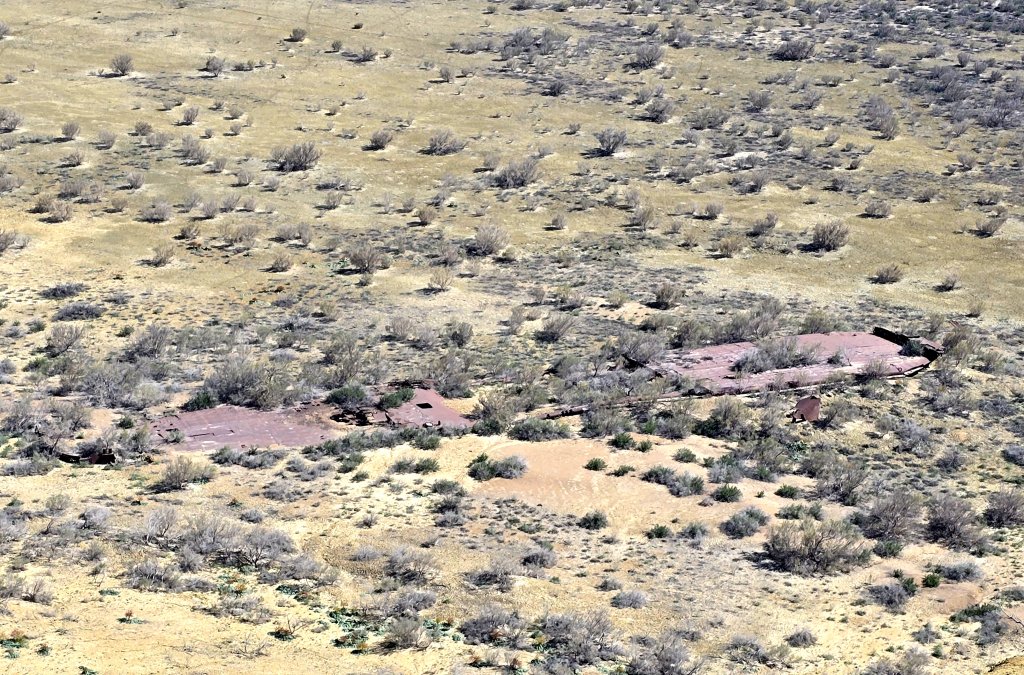
We drove along the southern coast, over the high plateau to where it drops probably 50 metres to the seabed. Way below us, an old barge once used to bring people and equipment to the island lay rusting. It was too windy to use the drone however Sasha, our fearless mountain goat and expert drone pilot, decided he would descend to below the level of the plateau to shelter from the wind and get the footage we needed.
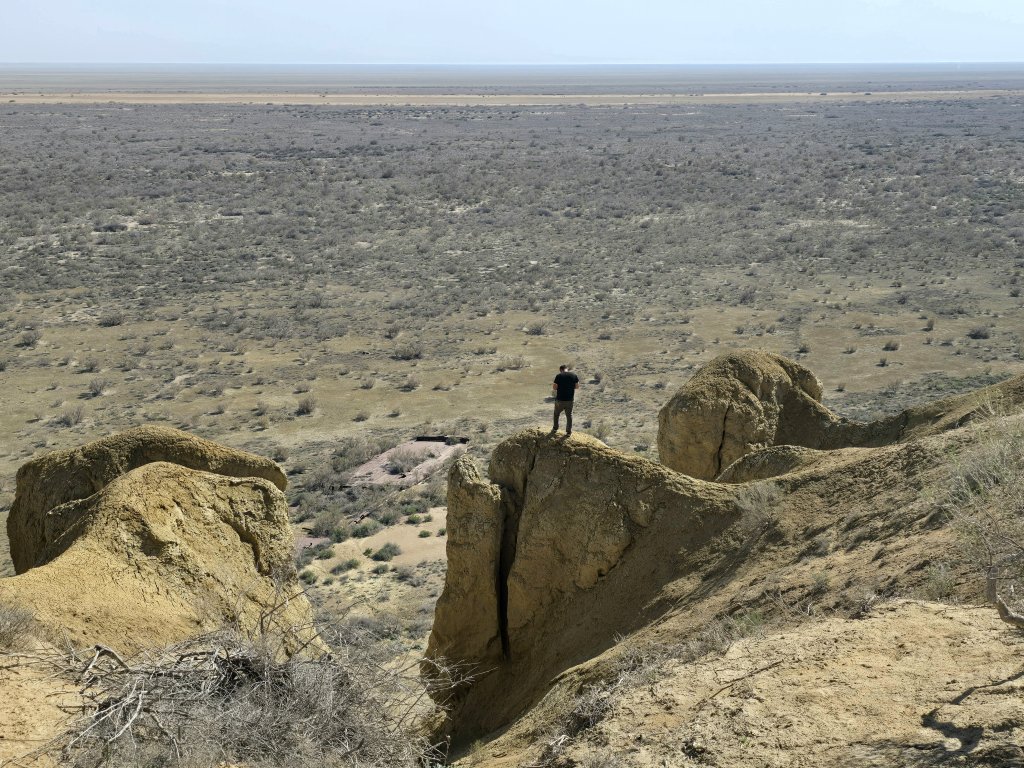
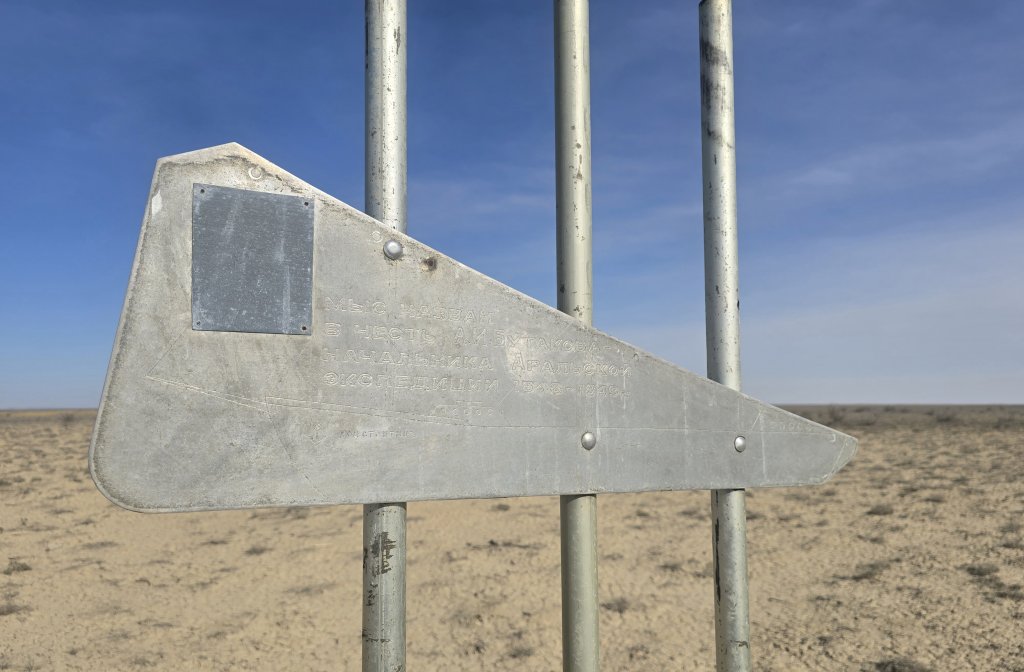
At the western end of the island, the ruins were completely demolished. A plaque marked the first Russian expedition to the island by renowned explorer Alexei Butakhova in 1848 – 1849.
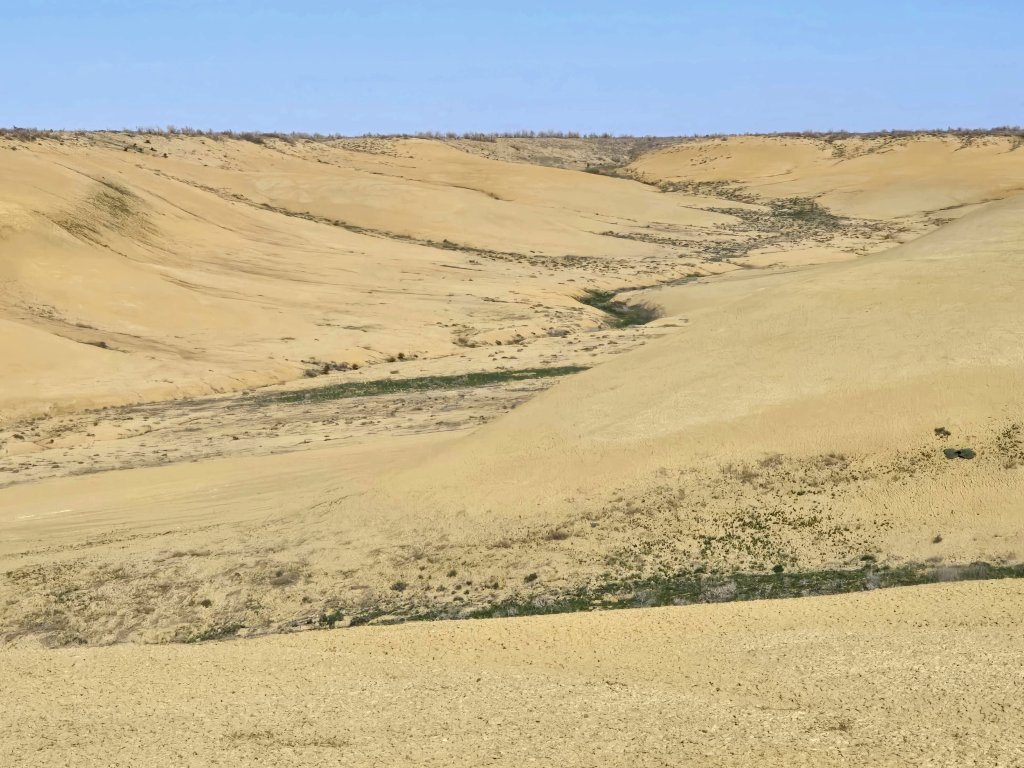
Another unusual landscape was the valley of “Yellow Sands” that contained a high content of sulphur.
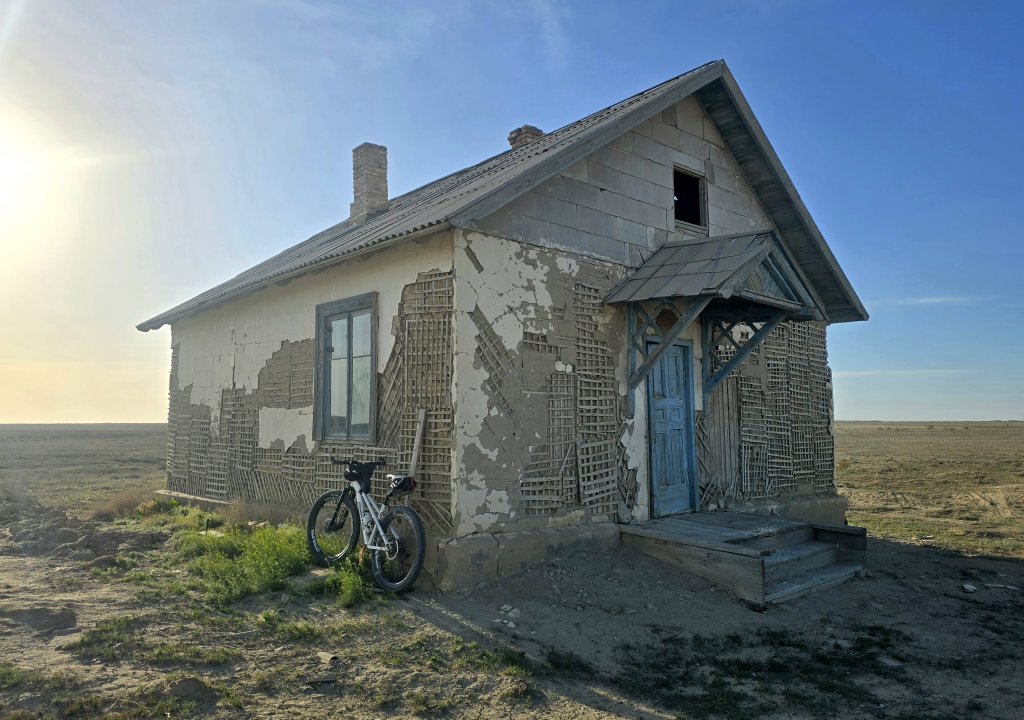
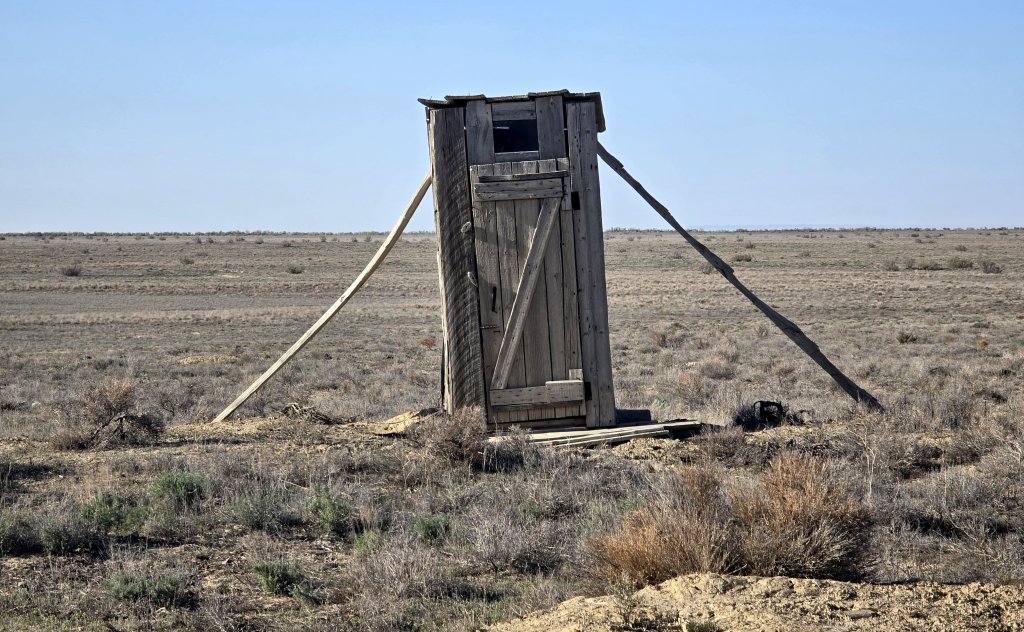
We moved on to the centre of the island to the former Barsakelmes Nature Reserve headquarters. The buildings were abandoned and weatherbeaten but the main residence was still intact and made the perfect shelter for us for the night. Our escorts farewelled us and set off back to Karateren and we tried to ignore the mysterious stories of the haunted “Island of no return,” sleeping on the dusty floor.
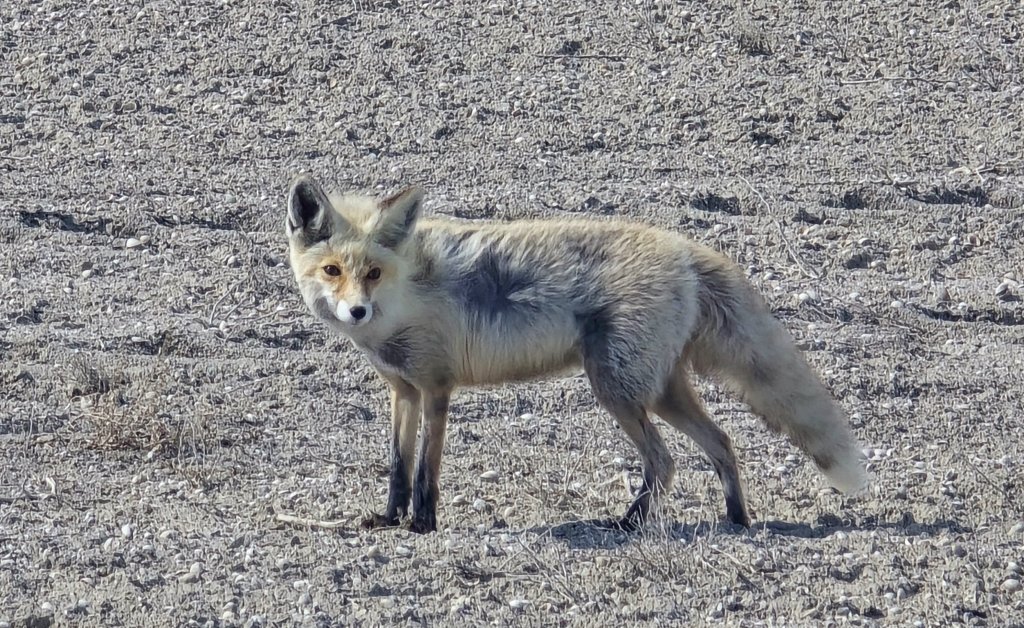
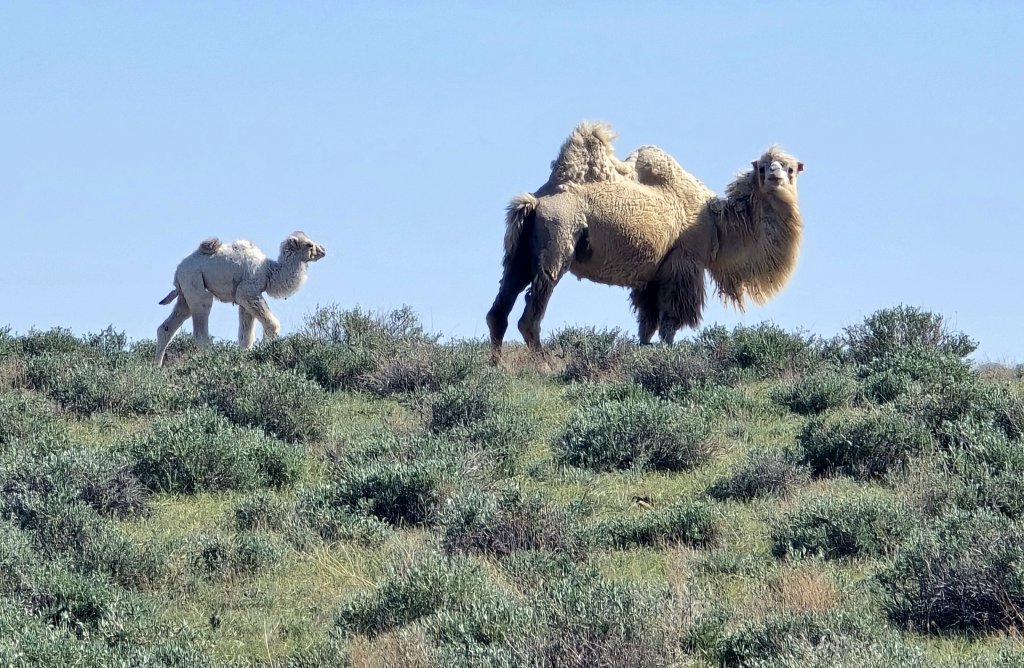
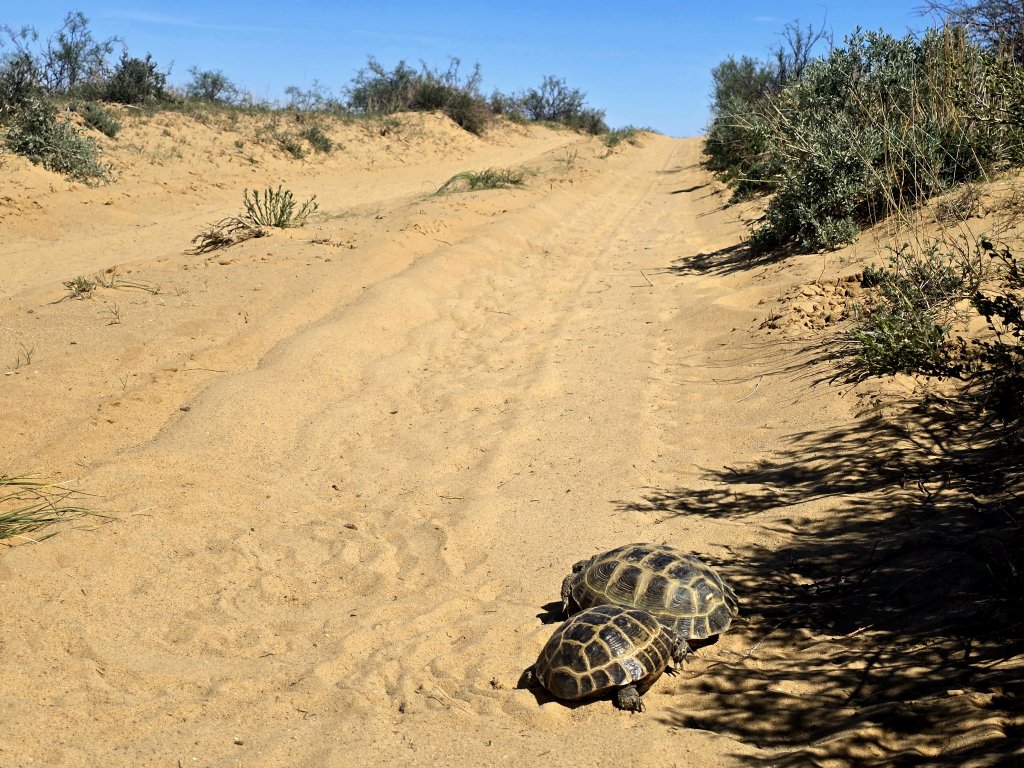
Barsakelmes Island and Kaskakulan, our next port of call, is home to thousands of invertebrates, 30 mammal species, 178 bird species and 20 reptile species, making the region a valuable UNESCO biosphere reserve. We spotted several goitered gazelles, two kulans, many Russian tortoises, birds of prey and a curious fox during our adventure.
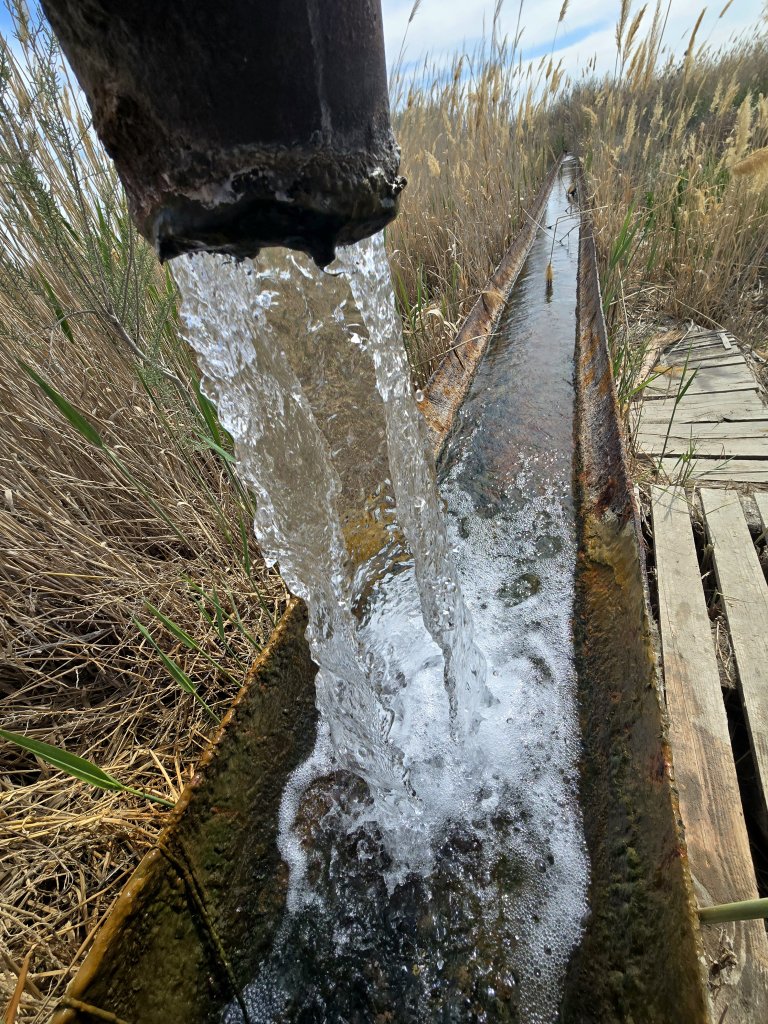
Driving to Kaskakulan was a rugged affair. To start with the track was not obvious. There were many tracks leading in different directions and of course no sign posts. At one stage Sasha drove entirely cross country, bush-bashing through the sand dunes, scrub and dried mud. Kaskakulan was also once an island, but now there is no sea, a land bridge has formed between Barsakelmes and Kaskakulan, which has a natural spring and has become an oasis for all animals, many have gradually migrated from the virtually waterless Barsakelmes island.
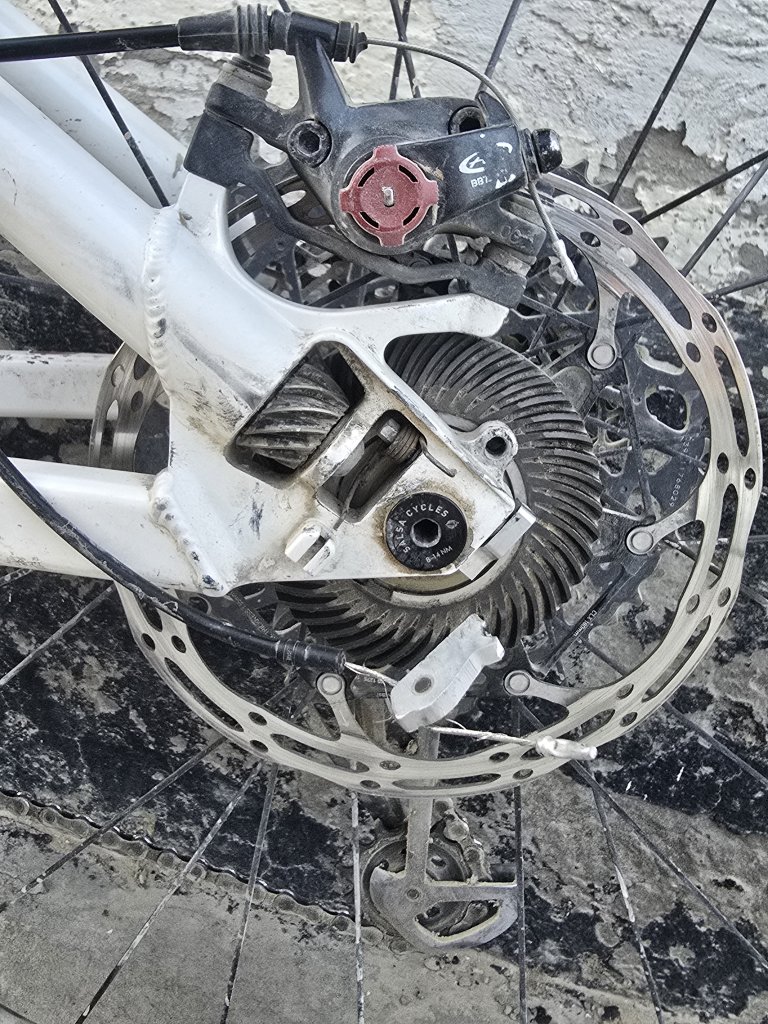
Back at Karateren, we were put up a second night by the mayor of the town in a spare room behind his home. It was there I noticed that a piece of my all-wheel drive system on my bike had been snapped off during the drive. It had been packed carefully on bags on the vehicle roof, but the drive was exceptionally rough. Sasha is wired to have a go at fixing anything and set about the challenge of repairing my bike. He was up half the night trying to problem solve and fashioned a tiny part to replace the broken aluminium piece. By morning it was made rideable as a normal bike but the AWD system was not in use.
To reach Aralsk, the main port city that once served the Aral Sea economy, it appeared a fairly simple, direct ride on a gravel road. The reality was 81km of it was very soft sand, corrugations and some pretty sizeable sand dunes…the first time of the journey I really needed the AWD system! I had a torrid time. My usual AWD fatbike with 4.8″ wide tyres would have handled the conditions comfortably (still hard work though). However, the 3″ wide tyres on my MTB did not provide enough flotation. I could not grip the sand, even with the tyre pressure as soft as possible. I wasn’t mentally prepared as I was not expecting this challenge and struggled to adopt the different mental and physical skillset for the task as I tracked over the former seabed, parallel to the coastline.
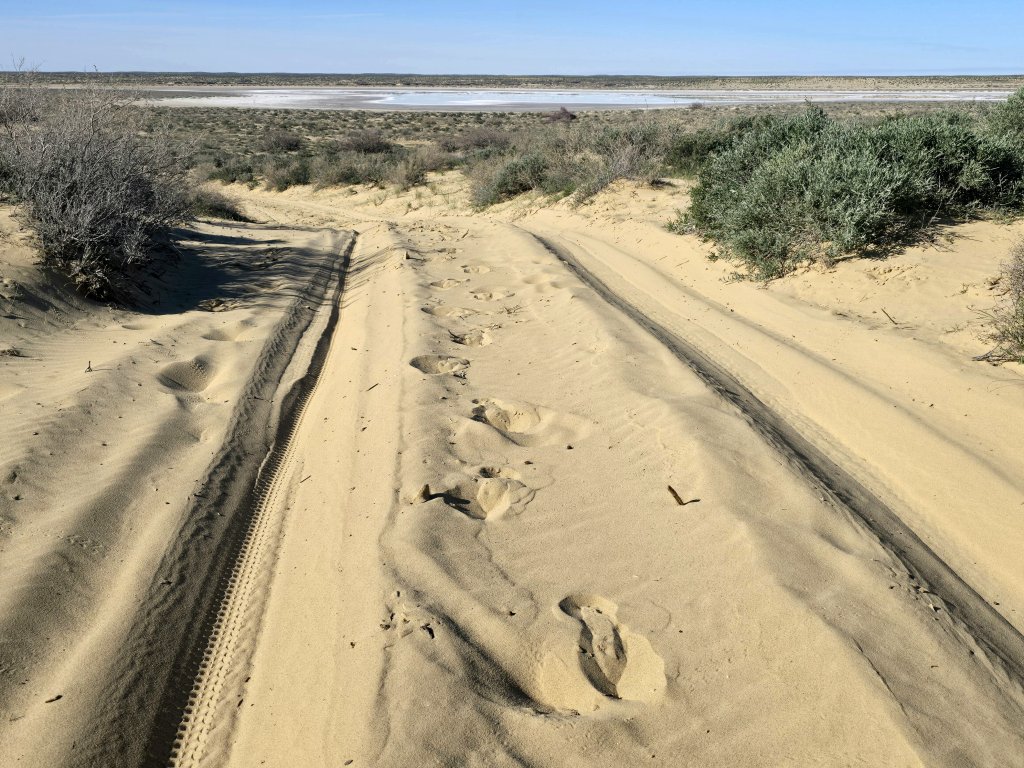
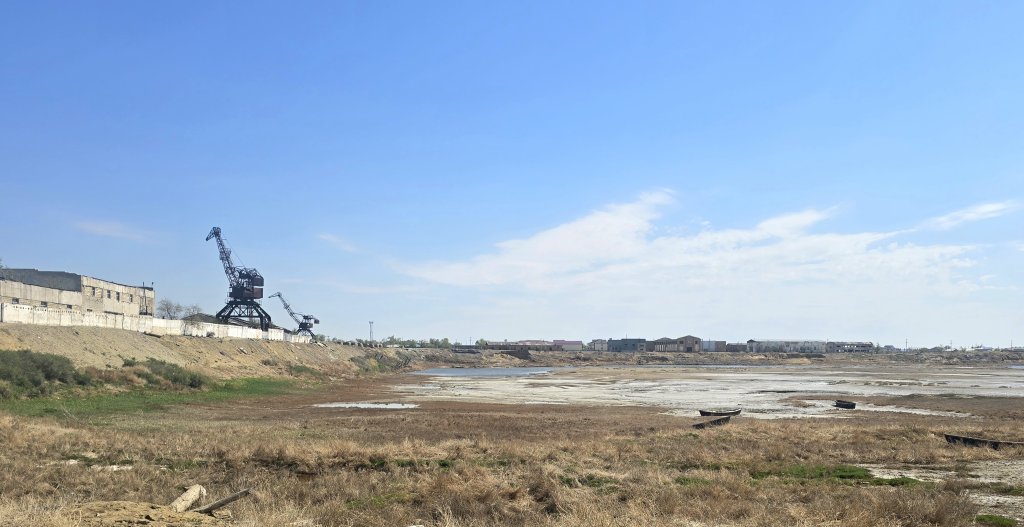
I made 81km the first day and was totally spent that night – Sasha chose the edge of a salt lake as the campsite because apparently we risked confrontation with scorpions if we camped where it was green. Eventually I was relieved to see the buildings of Aralsk in the distance – and sand dune by sand dune I made it. Here we have been taken care of by Akmaral an English teacher who is passionate about preserving Aralsk and the Aral Sea. She’s been involved in fishing and scientific projects and is now involved in developing tourism and with it, the economy. Her new venture is the Aral GeoPark for which they hope to secure UNESCO support. It is about to be launched next month.
I am racing to publish this blog before I leave in the morning, cycling west then south through some very remote parts around the Aral Sea to the Uzbekistan border. It will be another week before I can publish my next update.
Thanks to ZeroeSixZero, you can open this link on your phone and select “add to home screen” and the map will become and app. You can then keep updated in real time.
Support my Water.org fundraiser to help bring safe drinking water and sanitation to the world: Just $5 (USD) provides someone with safe drinking water or access to sanitation, and every $5 donated to my fundraiser will enter the donor into the Breaking the Cycle Prize Draw.
An education programme in partnership with Exploring by the Seat of Your Pants, with contributions from The Royal Geographical Society and The Duke of Edinburgh’s International Award Australia. We have created a Story Map resource to anchor the programme where presentations and updates will be added as we go.