Newsletter Subscribe
Enter your email address below and subscribe to our newsletter
Sprache wechseln: 
10th – 14th July | Langar to Khorog (and return to Dushanbe) | Distance: 216km | Total Distance: 7075km
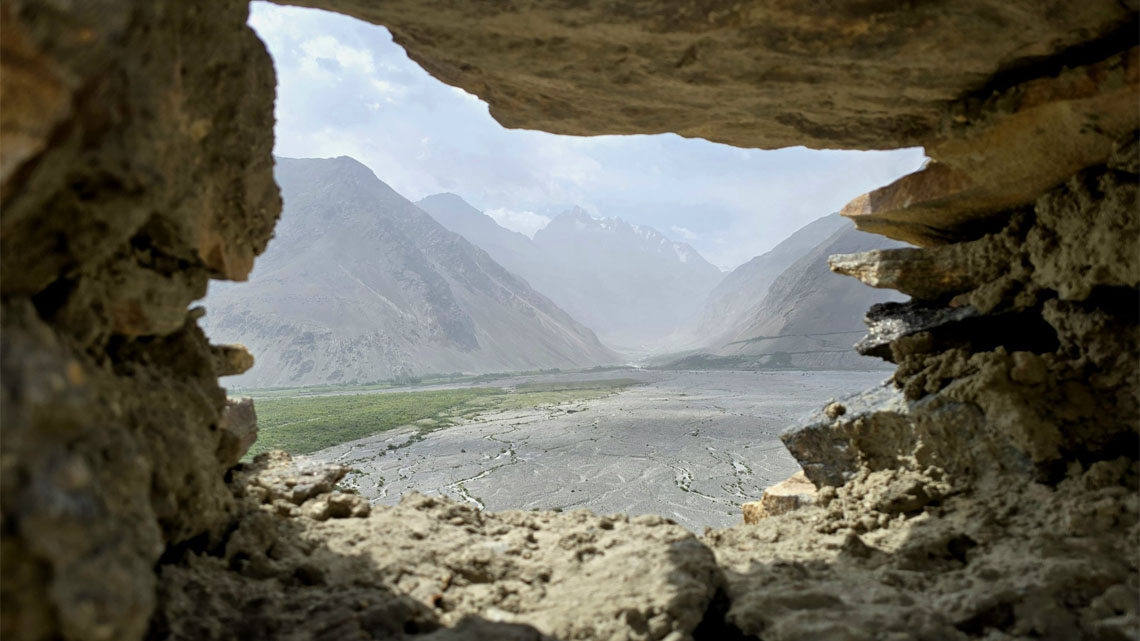
My journey through the Wakhan Valley began in Langar, where the Pamir River and the Wakhan River (that flows from the Wakhan Corridor in Afghanistan) meet to become the Panj River. The Wakhan Valley, as opposed to the Wakhan Corridor in Afghanistan, is the Tajikistan part of the Wakhan, a part of the Pamir and Hindu Kush mountains.
For centuries, the Wakhan Valley was an important principate of the famous Kushan, a great empire that extended from southeast Tajikistan to the Ganges Valley in India. The Kushan built several fortresses located on the top of very high hills, some of which I wanted to see. Historically, the region served as a dividing line between west and east Asia, so the valley was also an important Silk Road route. In the 20th century, it also marked a clear border between the Soviet Union and the British Empire.
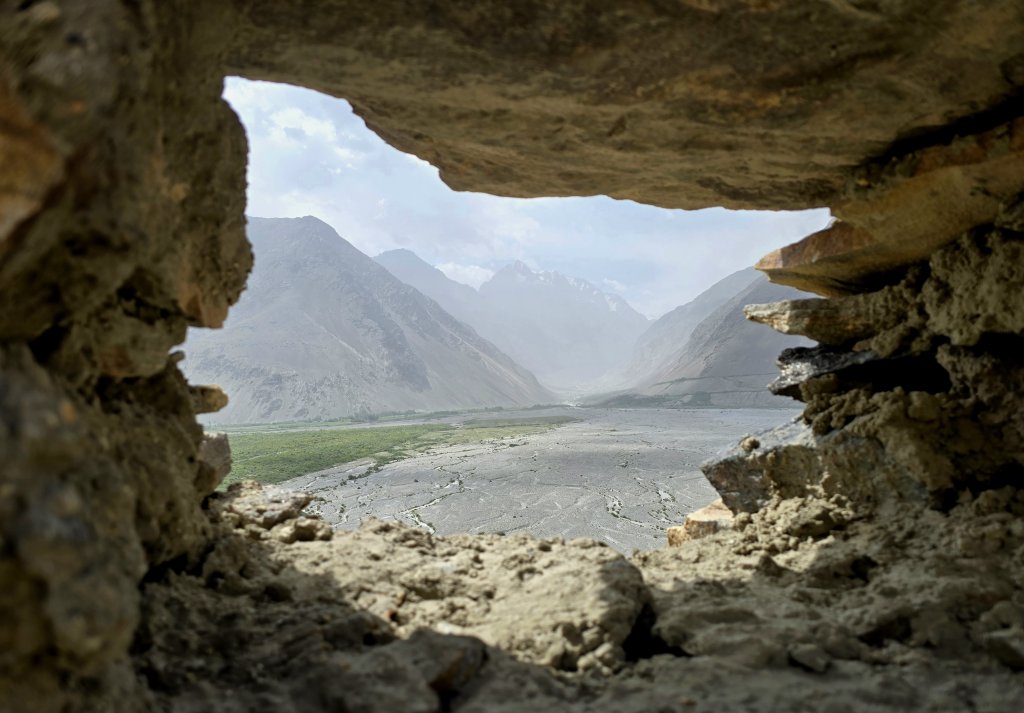
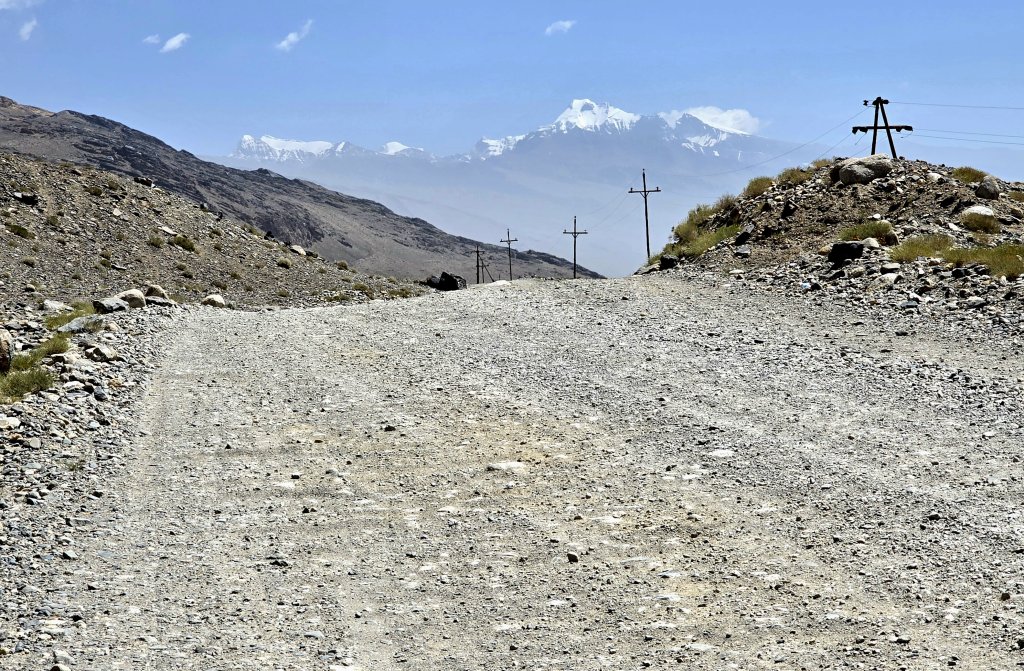
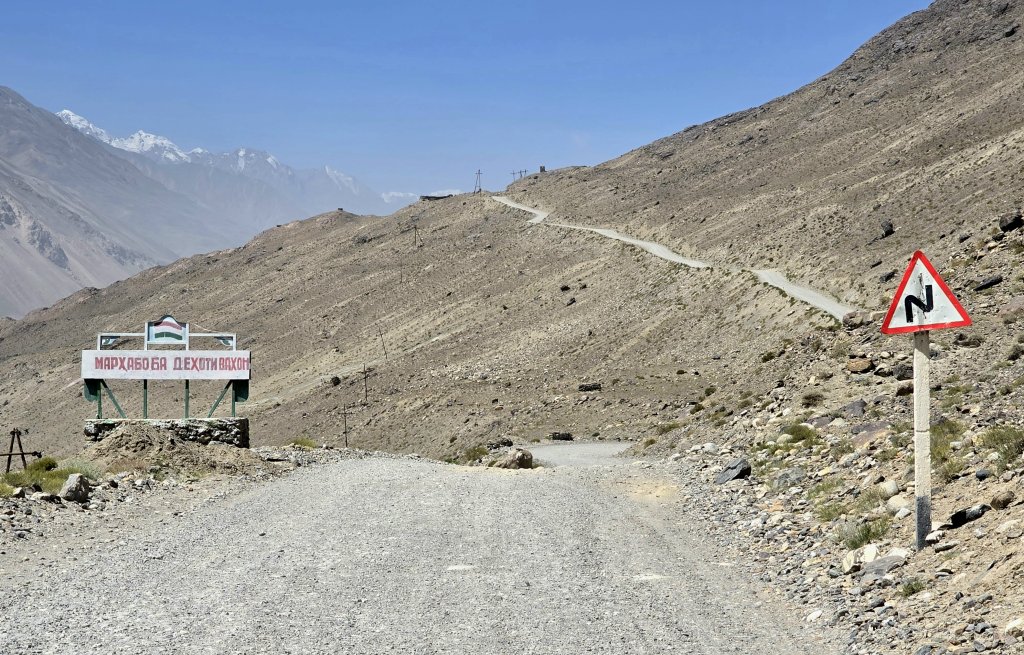
Rolling on from the high Pamirs, this was only a three day section that I hoped wouldn’t be so intense as I was pretty tired. Out of Langar I was only planning a short day to try to let my body catch up a bit. Heading out from the green, protected sanctuary of the village, the weather had other ideas. The majestic high mountainous walls that form the valley served to funnel gale-force winds up the Panj River. The road was terrible, a continuation from the road through Khargush Gorge that I rode the previous day. It was stony (loose and embedded stones), corrugated, sometimes sandy and there were a lot of steep climbs too. I struggled to average 11km-12km an hour.
Just after lunch, I stopped for my 5km break, (I had to break my day into small sections to get through it) went to adjust my seat that had slipped down due to the rough road, and noticed a crack almost right through the middle of my seat tube. Lucky the seat didn’t snap completely while is was cycling! This was very alarming – a structural break in the frame. I could ride no further without it being fixed.
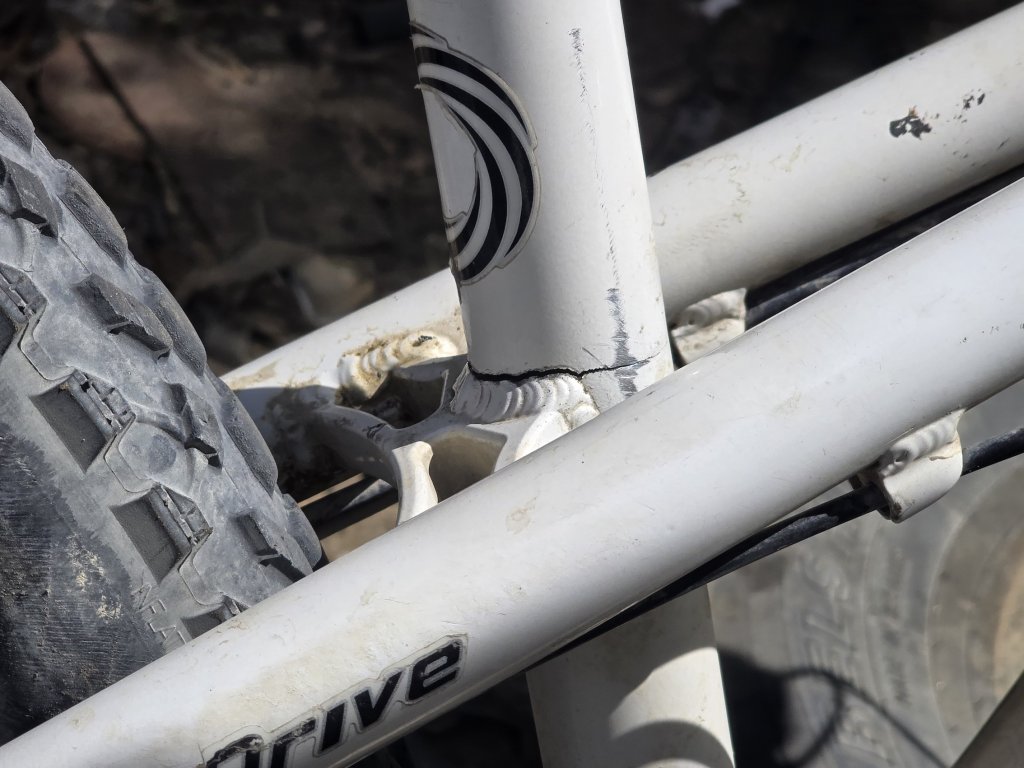
But what to do in the remote Wakhan Valley where there are few amenities. The bike is aluminium which requires specialist skills to weld. Karim asked around – he had a great suggestion to fit a piece of pipe inside the tube to act as a kind of splint. The first metal worker was out but we found another guy in a village 5km away who could help. His yard was full of apparent junk from old cars, air conditioners, pieces of pipe – anything that could be useful one day. He measured the seat tube and scouted around for a suitable piece of pipe which he found inside a hydraulic unit. He cut it out with an angle grinder and went to work.
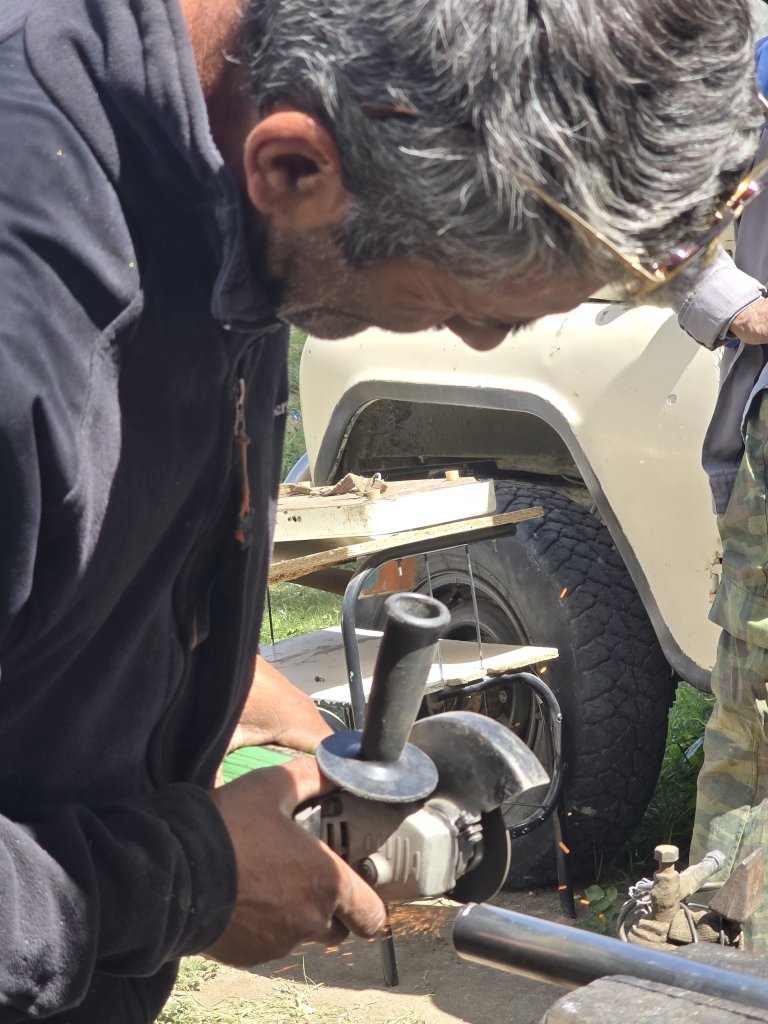
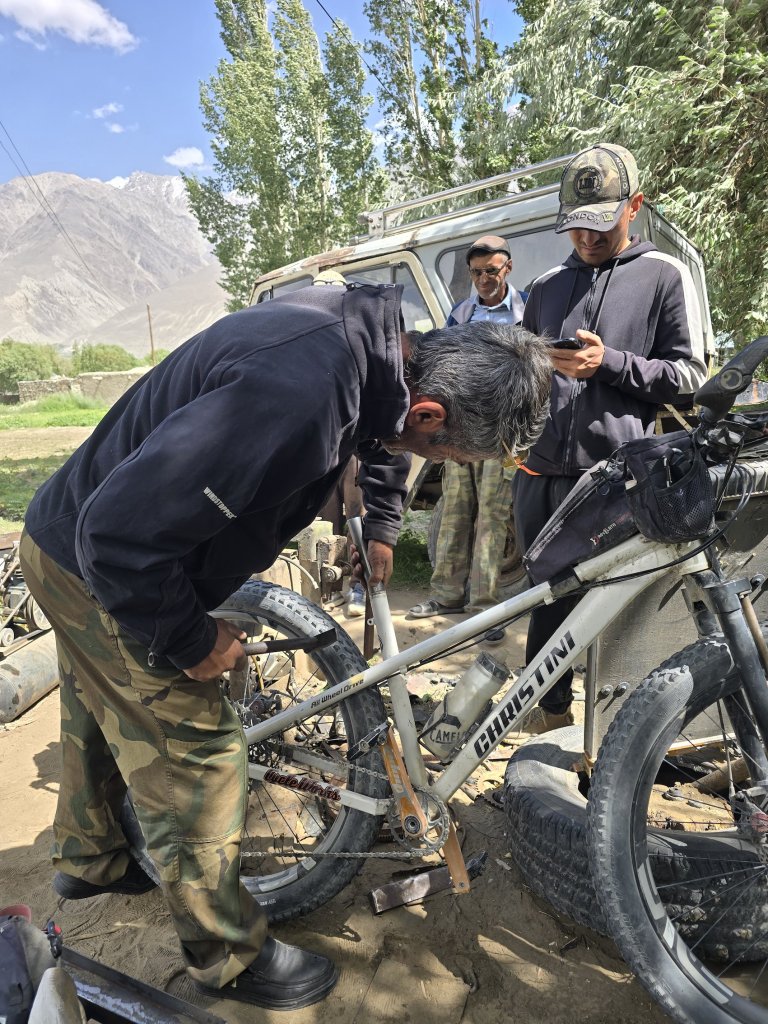
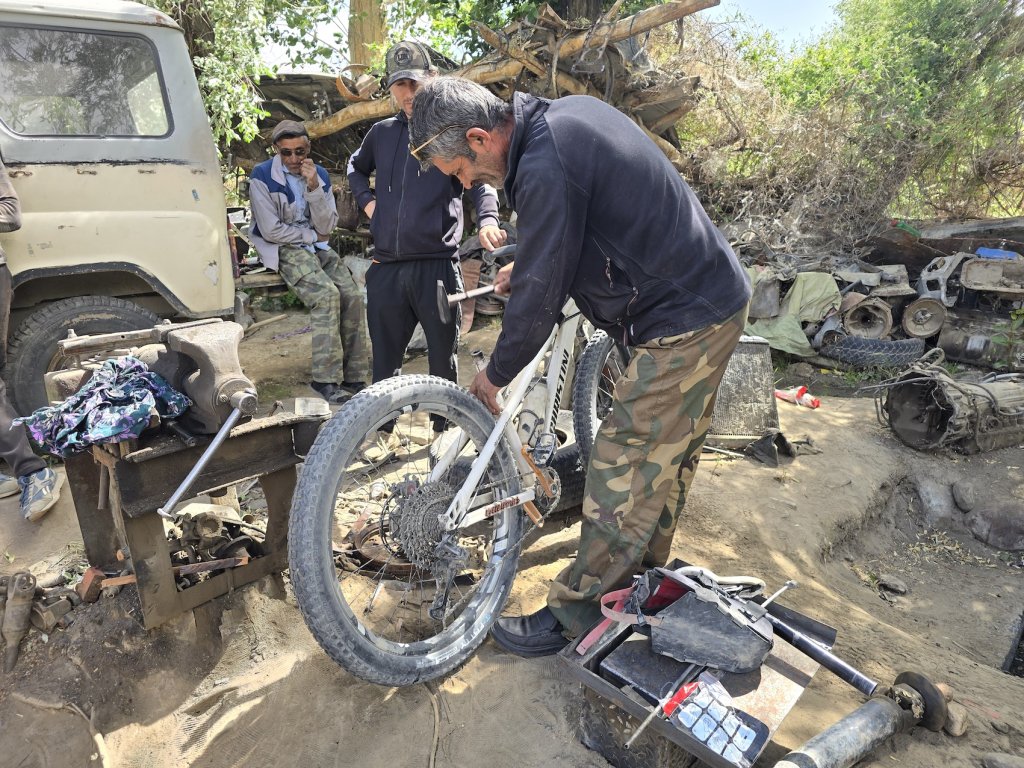
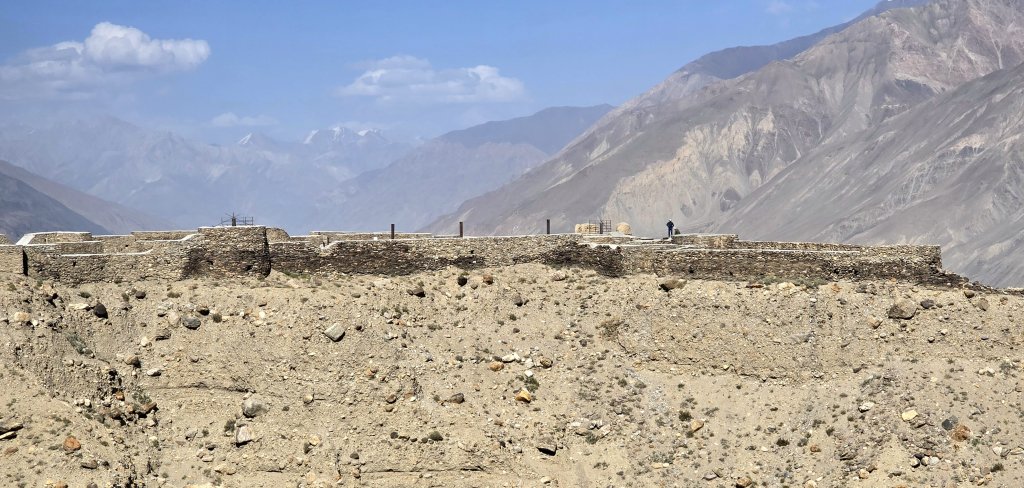
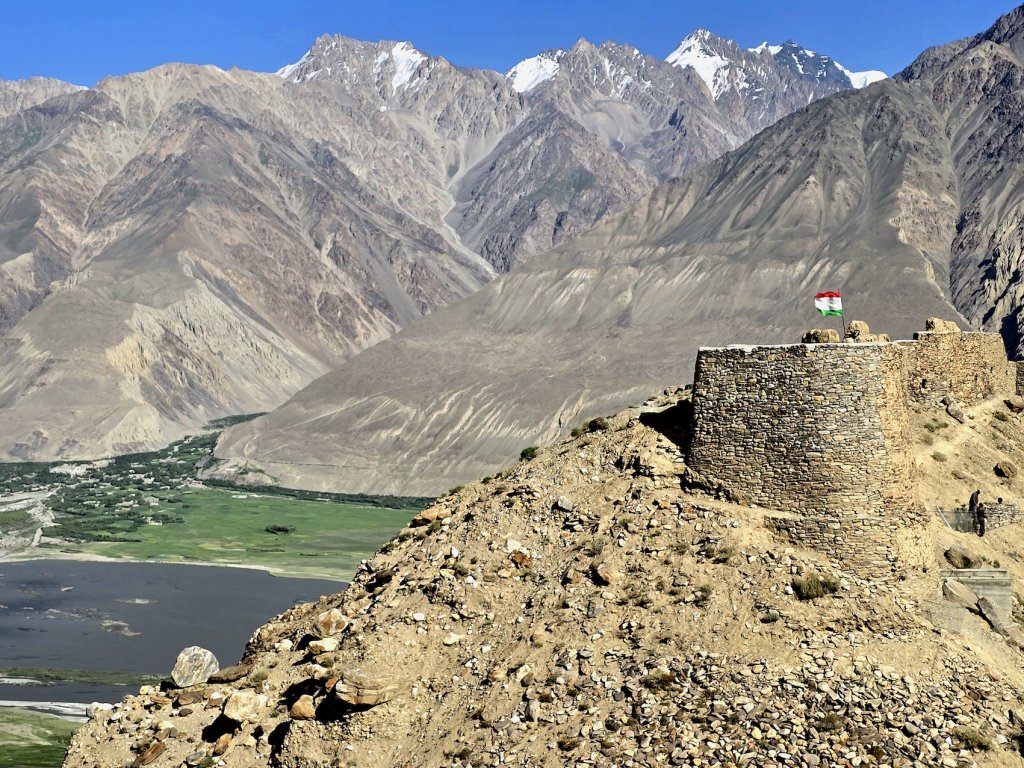
The bike temporarily fixed, enough to get through the Wakhan Valley and back to Dushanbe where it could be welded, I finished off the last 15km of my ride and we took the late afternoon to visit Yamchun Fort and some hot springs. This involved a steep climb away from the valley (we drove this) and gave amazing views over the valley.
The road to Ishakshim was more of the same to start with, but during the day, there were more and more strips of the old Soviet made asphalt. The headwind nearly blew me off the road on the longest climb – back up to 2928m. 72km doesn’t seem much distance, but in these conditions, it was a full day. The last part was mostly old rough tarmac where I could move along pretty well. The valley narrowed into a gorge and then broadened as I neared Ishkashim.
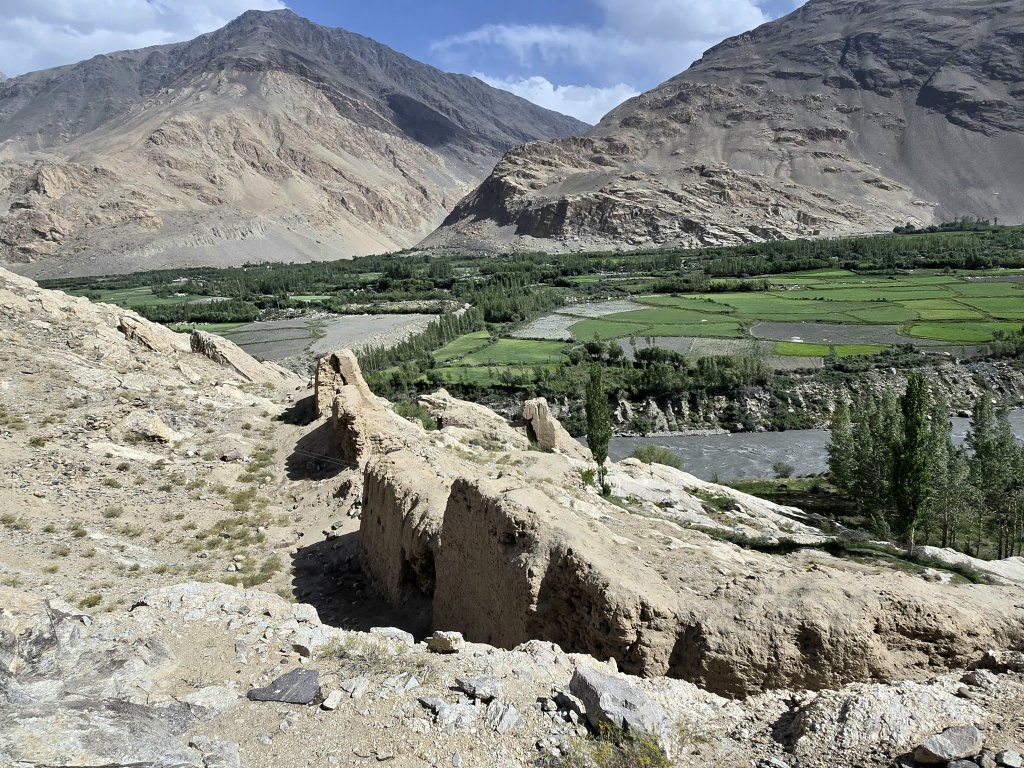
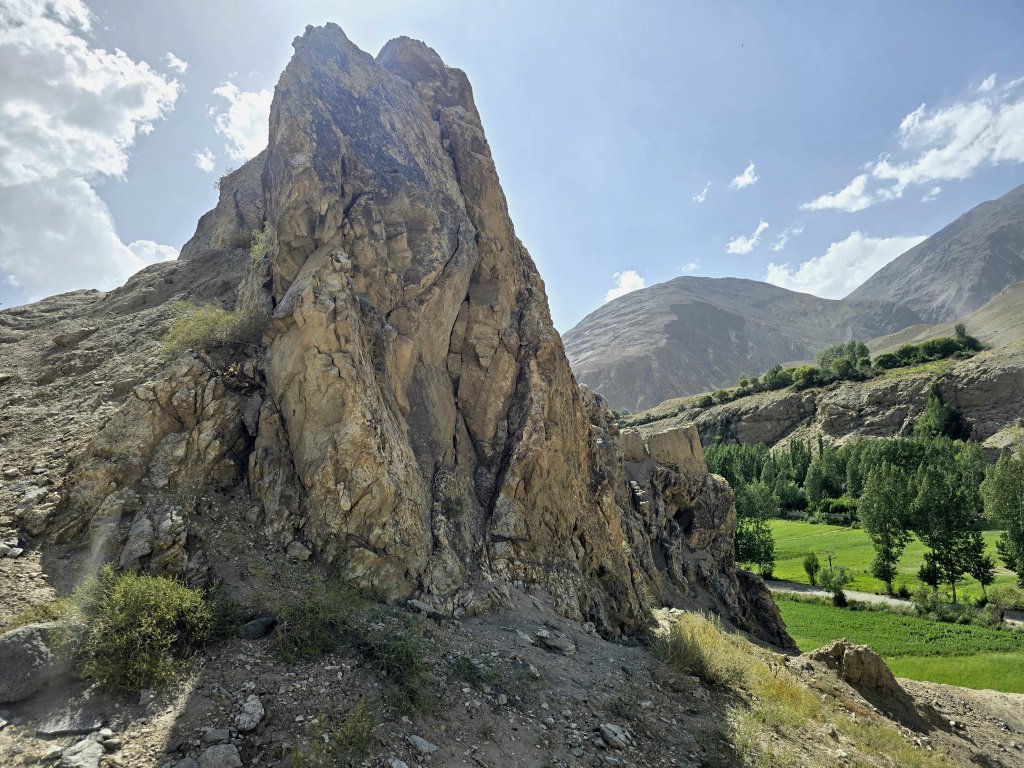
High above the valley was another Kushan fort – Kala Forrtress – slightly older than Yamchun. It didn’t seem that significant from the roadside, but built on a rocky hill overlooking the valley, it must have been imposing to any would-be invader. The hill itself was a part of the design with surveillance turrets built into the rock giving views of all directions.
Until the last few years, Ishkashim was a well-used border crossing between Tajikistan and Afghanistan. It is the crossing I had hoped to take until I learned it had been closed by the Taliban. Every Saturday, a market is held where Tajiks and Afghans can meet and trade. Security either side of the bridge is high. Travellers are sometimes allowed to cross, but we didn’t have time to wait another hour as I had to cycle to Khorog – a full day knowing the likely conditions.
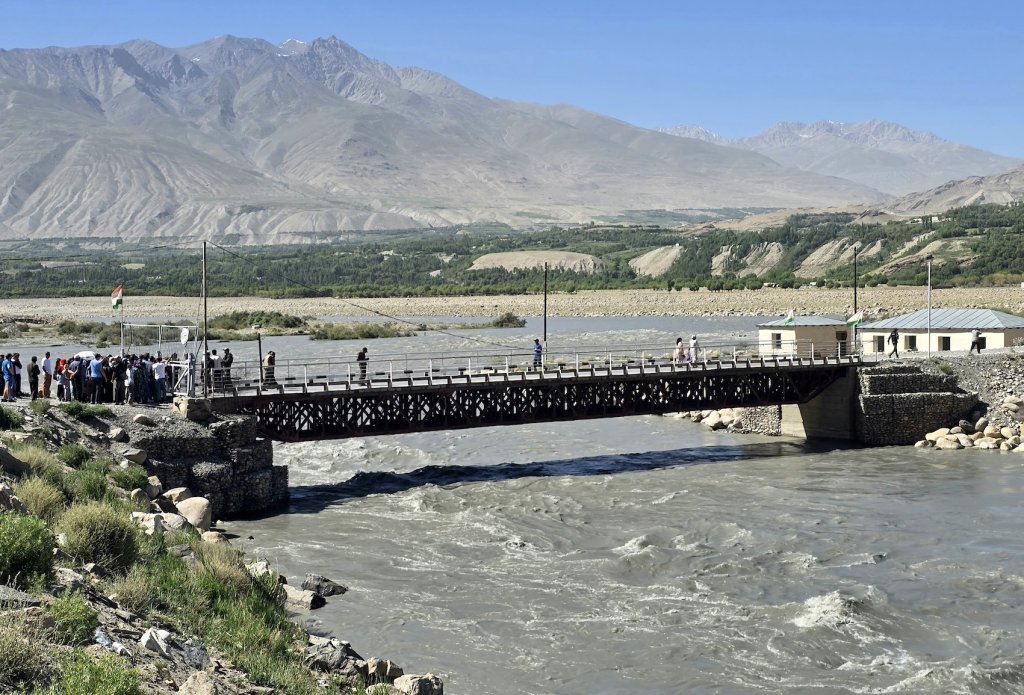
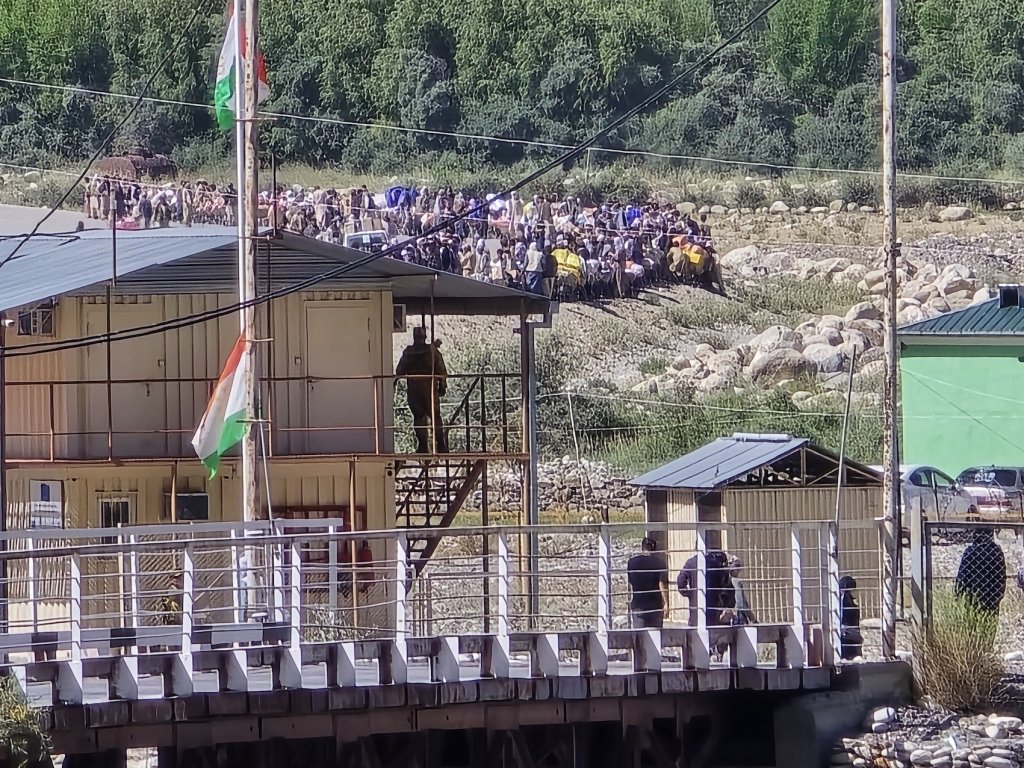
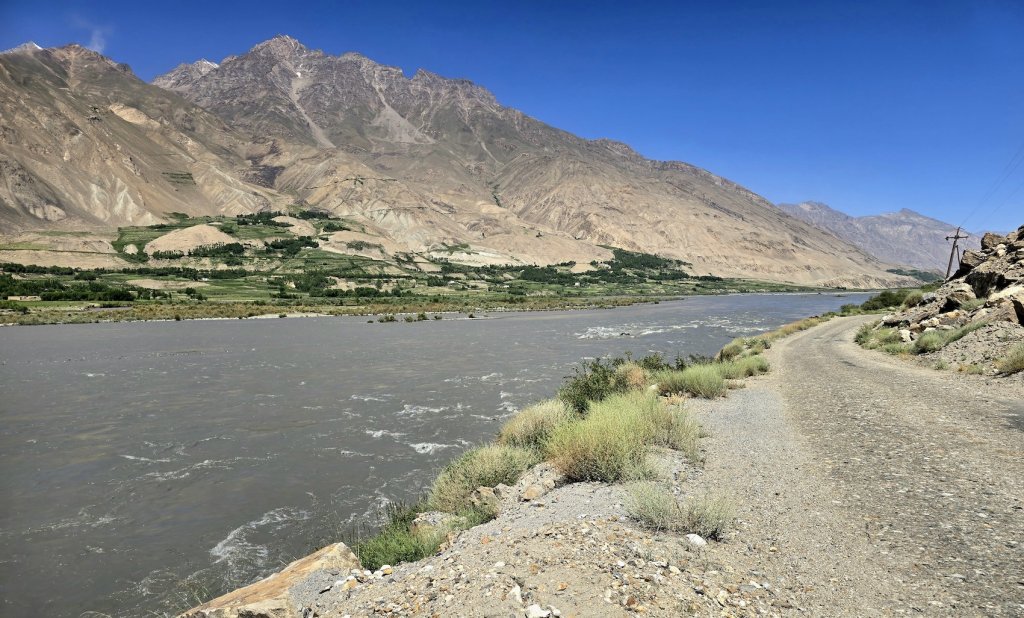
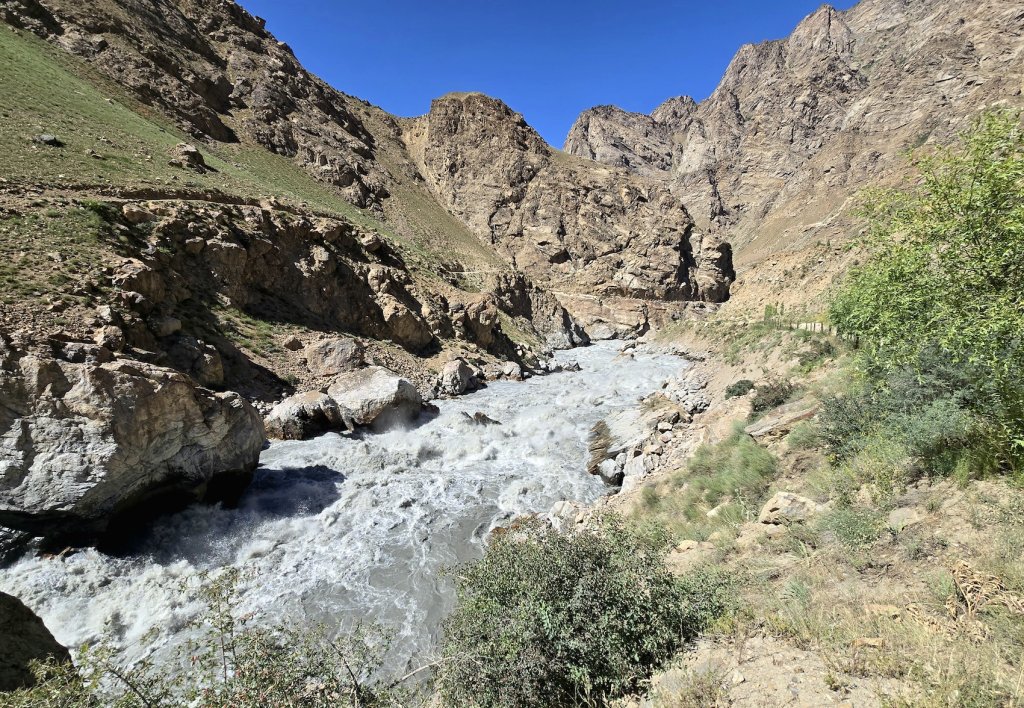
It was great to finally reach Khorog, the city where I started the big loop through the Pamirs. This was the end of this section of the expedition. Now Karim had a 10 hour drive to get back to Dushanbe, a route he is used to doing. He did a brilliant job. We arrived in Dushanbe a day ahead of my schedule, which was all very well because I needed the extra day to rest and sort out the final two phases of the expedition – through Kyrgyzstan and the Fergana Valley, and then the Wakhan Corridor in Afghanistan.
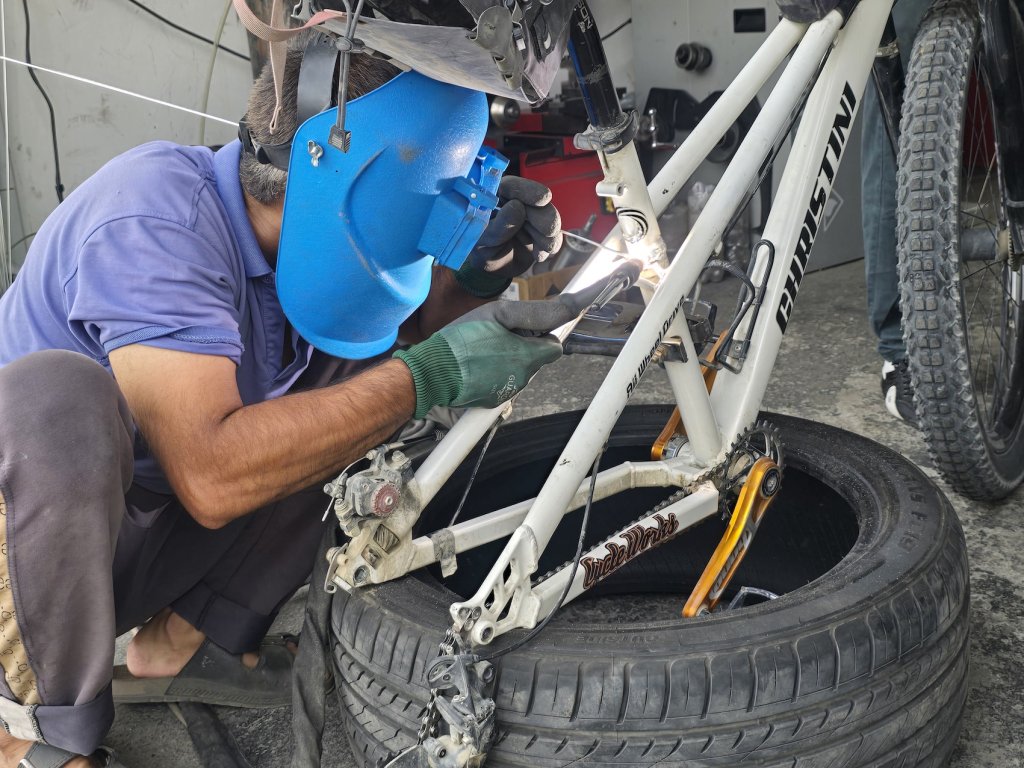
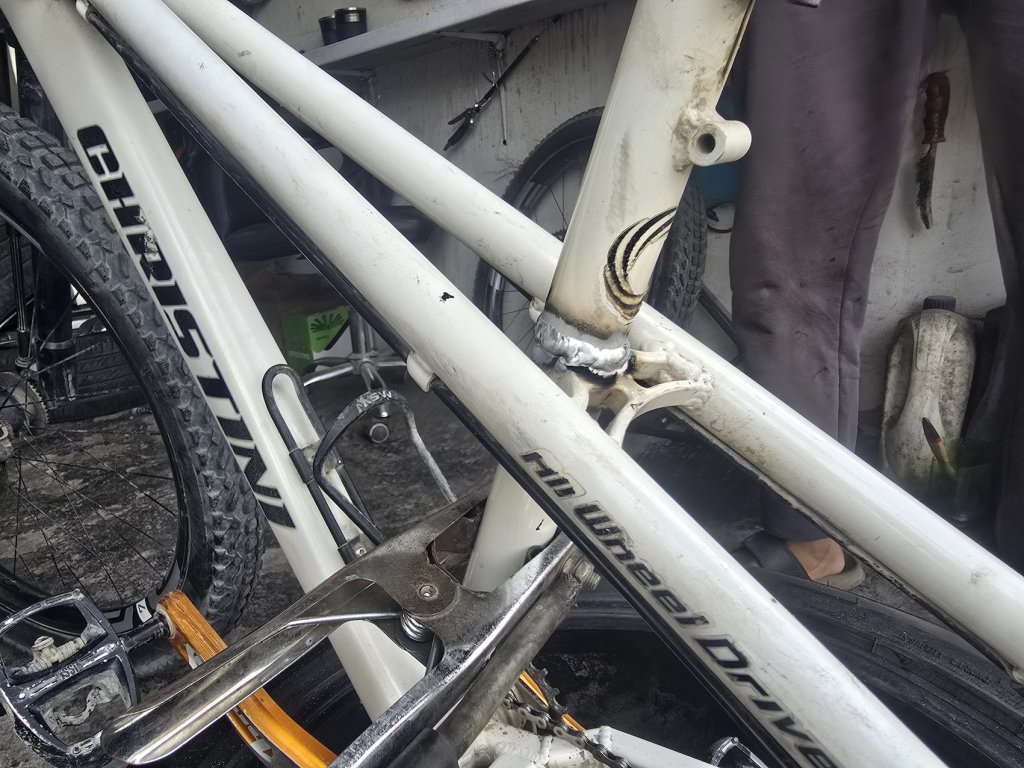
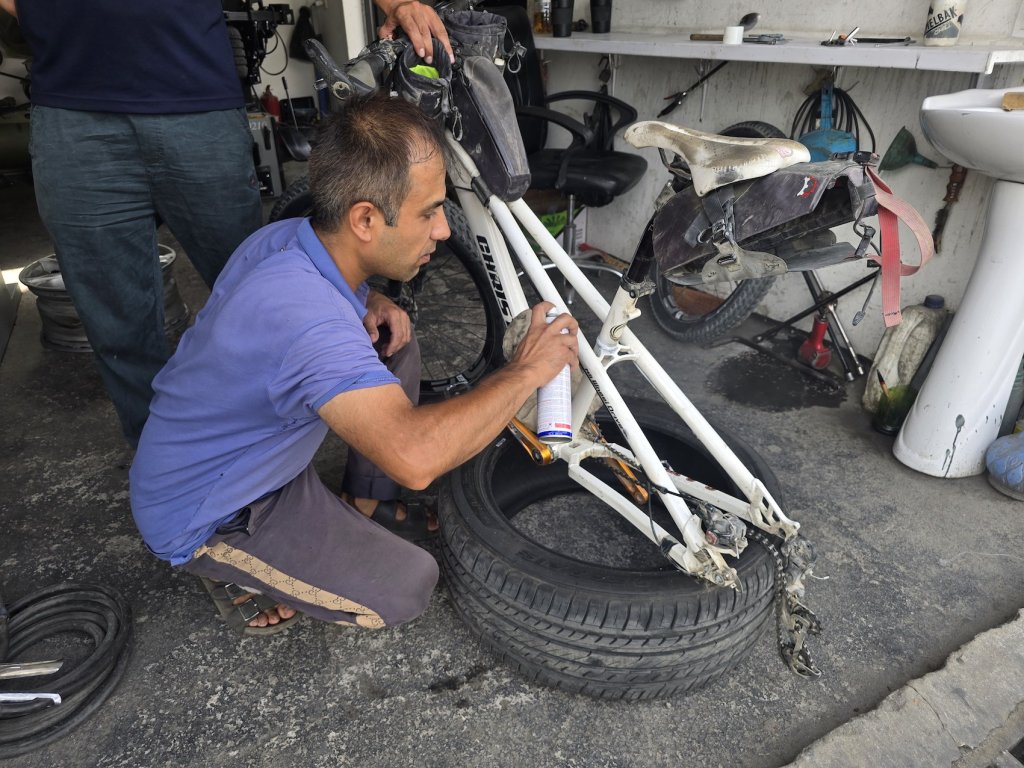
At the top of the to-do list was getting the bike welded.
The next blog will be from Kyrgyzstan after my flight to Bishkek.
Thanks to ZeroeSixZero, you can open this link on your phone and select “add to home screen” and the map will become and app. You can then keep updated in real time.
Support my Water.org fundraiser to help bring safe drinking water and sanitation to the world: Just $5 (USD) provides someone with safe drinking water or access to sanitation, and every $5 donated to my fundraiser will enter the donor into the Breaking the Cycle Prize Draw.
An education programme in partnership with Exploring by the Seat of Your Pants, with contributions from The Royal Geographical Society and The Duke of Edinburgh’s International Award Australia. We have created a Story Map resource to anchor the programme where presentations and updates will be added as we go.